NDIS Community Nursing Care

Professional Nursing Support, Centred Around You

Living with disability-related health needs can require ongoing clinical support, monitoring and coordination.

NDIS Community Nursing Care

National Disability Service Provider provides Community Nursing Care for eligible NDIS participants, with support designed around each person's individual health needs, routines, preferences and goals.

Our nursing approach focuses on safety, dignity, independence and continuity of care.

Community Nursing enquiries welcome Australia-wide.

Phone: 1800 896 599

Clinical Expertise. Personalised Support. You at the Centre.

Professional nursing care that works around your everyday life.

Nursing Support Where Everyday Life Happens

Nursing Support Where Everyday Life Happens

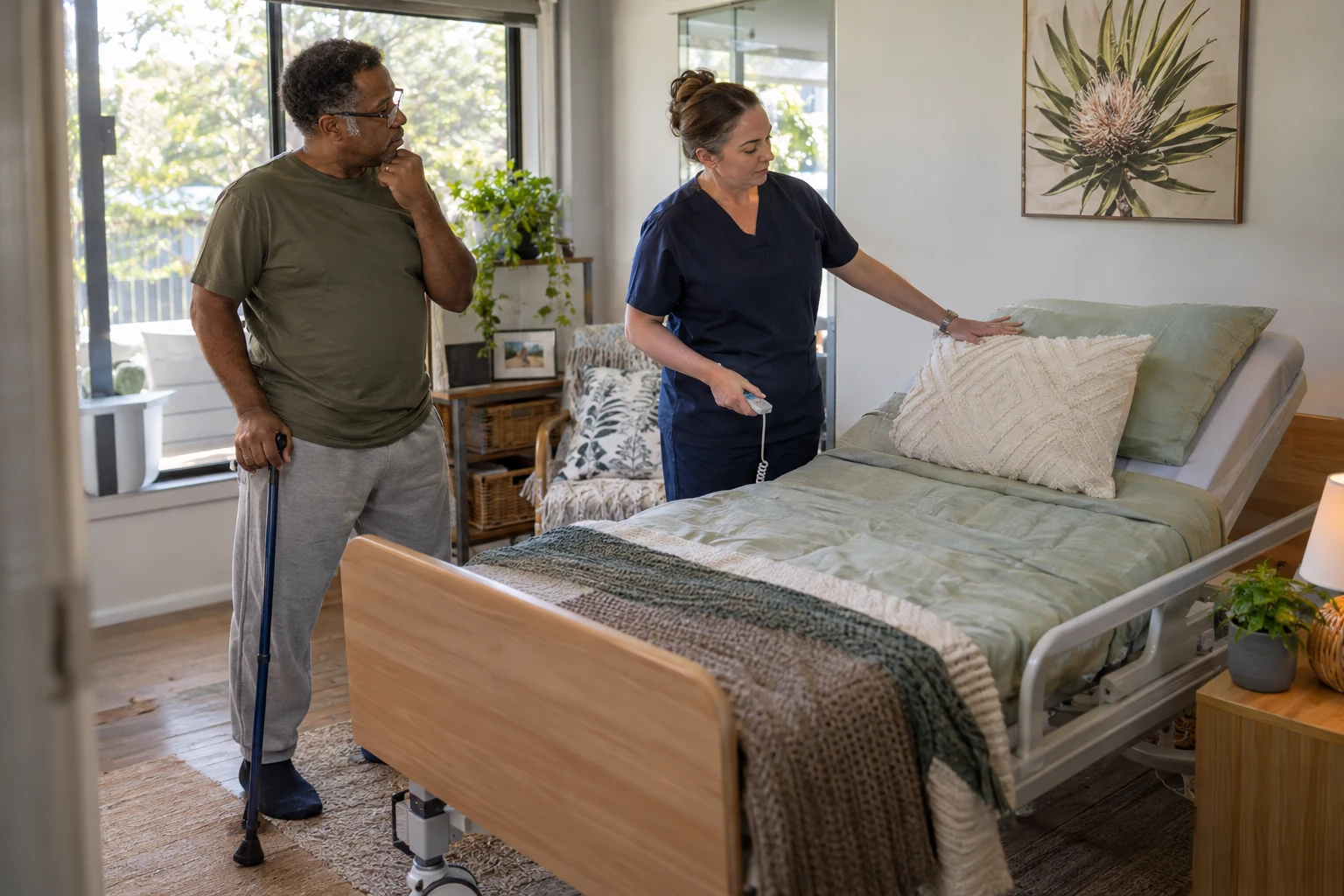
Not all disability-related health support needs to happen in a hospital or clinic.

Community Nursing Care can help eligible participants receive appropriate disability-related nursing support within their home or community environment.

Our nursing team works with participants, families, carers and other health professionals to understand individual needs and establish safe, practical care arrangements.

Depending on the participant's needs, support may involve assessment, monitoring, care planning, clinical interventions, education or coordination with other professionals.

Every service begins with the individual.

Disability-Related Nursing Support in the Community

Community Nursing Care provides nursing services for eligible participants who have health support needs related to their disability.

The purpose is to help participants safely manage disability-related health needs while maintaining independence and participation in everyday life.

Depending on the participant's individual circumstances, Community Nursing Care may involve:

  • Nursing assessment
  • Clinical monitoring
  • Development or review of care plans
  • Disability-related clinical support
  • Health education
  • Support worker education or training where appropriate
  • Monitoring changes in health needs
  • Communication with relevant health professionals
  • Supporting continuity of care

The exact nursing service required is determined by the participant's individual needs, NDIS funding, clinical assessment and professional scope.

Disability-Related Nursing Support in the Community
Individualised Nursing Care

Individualised Nursing Care

Health Assessments

Assessment of disability-related health needs to help identify appropriate nursing supports, risks and care requirements.

Care Planning

Development, implementation or review of individual nursing and health support plans where appropriate.

Wound & Pressure Care

Assessment, monitoring and management of eligible disability-related wound or pressure care needs.

Continence Support

Nursing assessment and support relating to disability-related continence needs where appropriate.

Diabetes-Related Support

Support with disability-related diabetes management where this forms part of the participant's eligible NDIS support needs.

Respiratory Support

Nursing input relating to disability-related respiratory support and monitoring where clinically appropriate.

Nutrition & Enteral Support

Nursing support associated with disability-related nutrition or enteral feeding needs where appropriate and within professional scope.

Catheter-Related Support

Clinical support relating to urinary catheter needs where this is appropriate to the participant's individual care arrangements.

Seizure-Related Support

Support with monitoring and management planning relating to disability-related seizure needs where appropriate.

Medication-Related Support

Nursing support relating to medication management where this is clinically required and within professional scope.

Health Monitoring

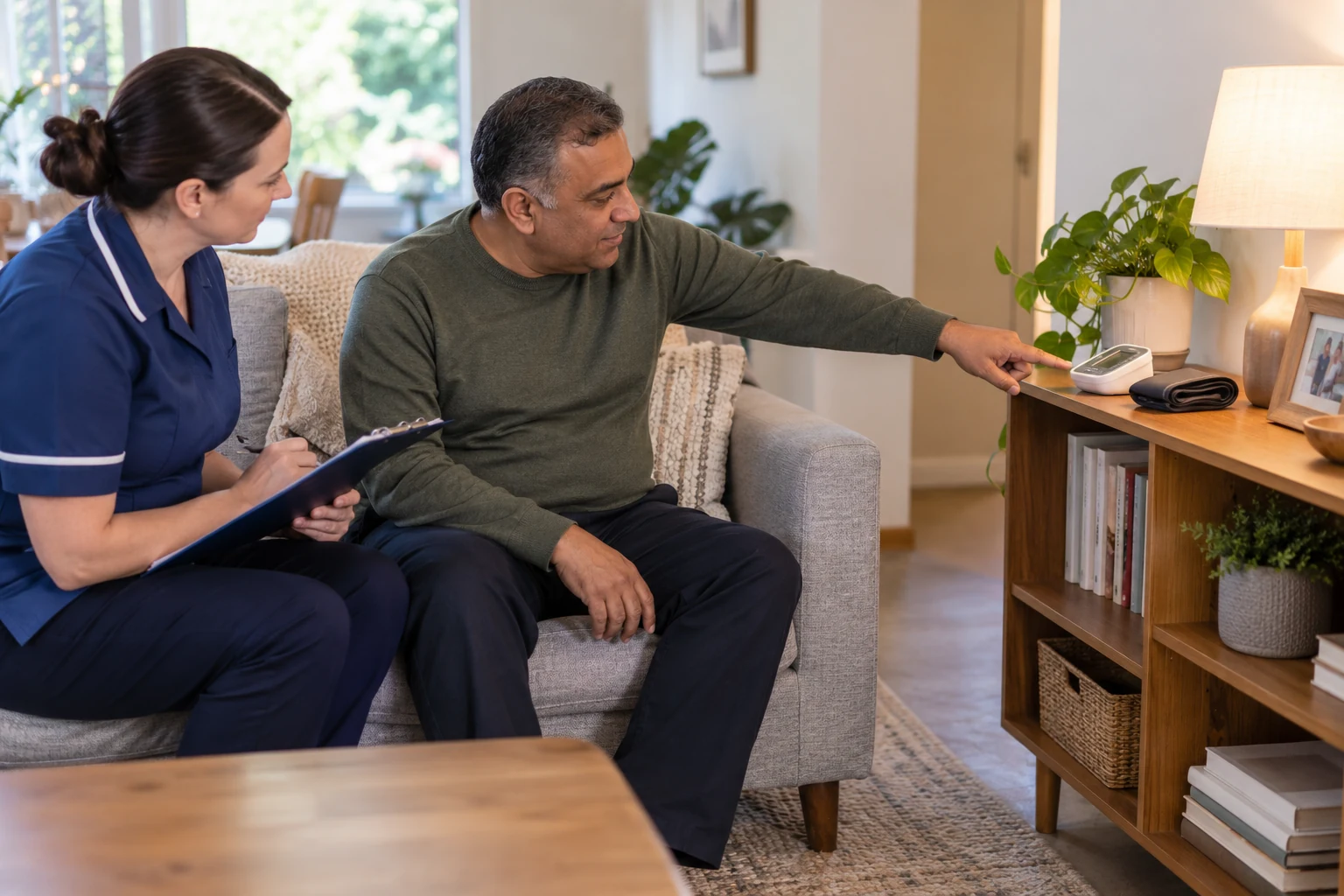
Monitoring relevant health indicators and identifying changes that may require further clinical review.

Participant & Carer Education

Helping participants, families and carers better understand relevant care routines and health management strategies.

Support Worker Training

Where appropriate, nursing professionals may provide participant-specific education or training to support workers for particular disability-related health tasks.
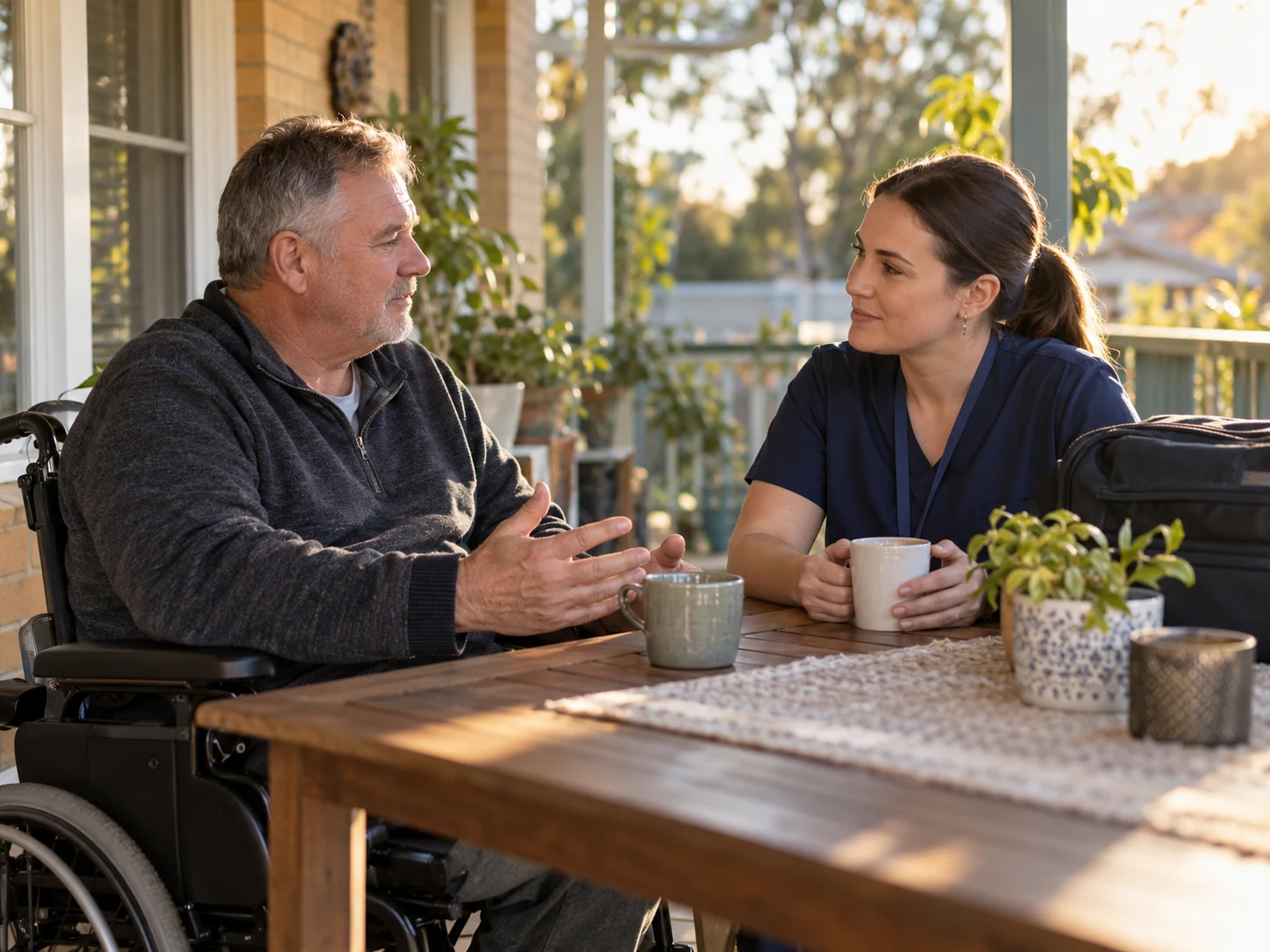
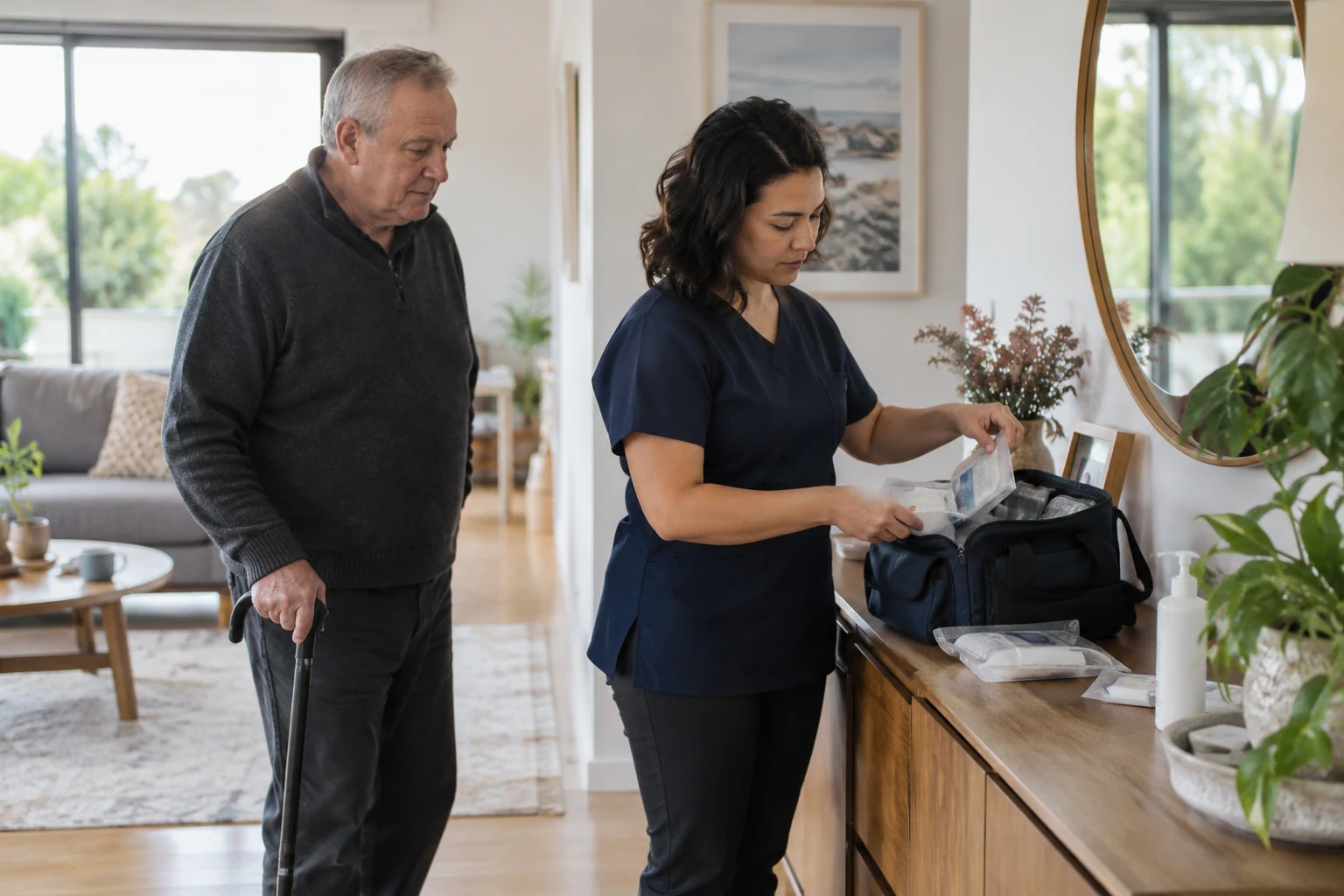
Clinical Care Without Losing Sight of the Person

Clinical Care Without Losing Sight of the Person

Nursing support should never be only about a diagnosis, procedure or medical task.

We take the time to understand:

  • Your health support needs
  • Your disability
  • Your daily routines
  • Your communication preferences
  • Your personal care preferences
  • Your cultural needs
  • Your living environment
  • Your goals
  • Your support network
  • Your level of independence
  • Your concerns and priorities

This information helps nursing support fit more naturally into your everyday life.

Care in Familiar Surroundings

Care in Familiar Surroundings

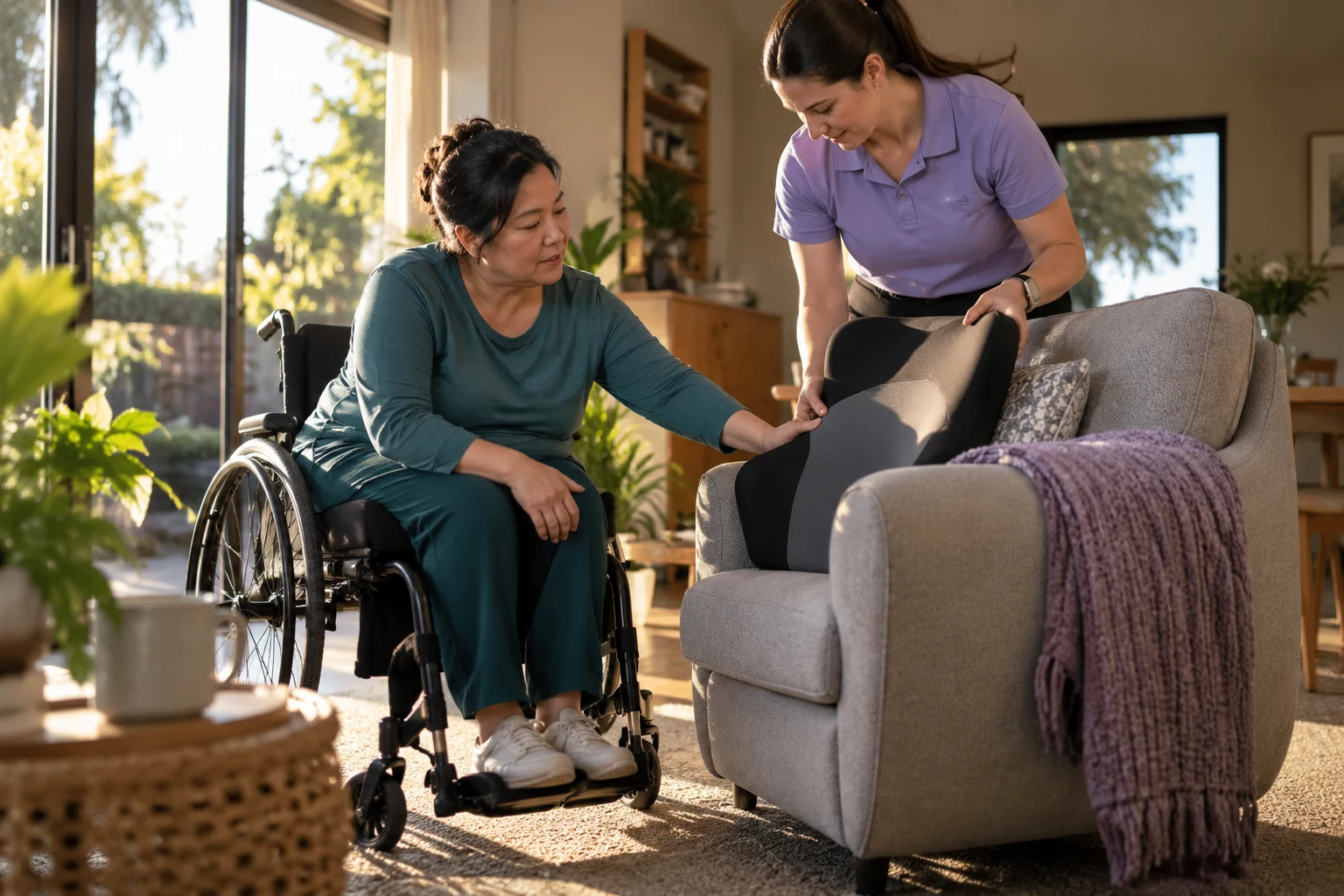
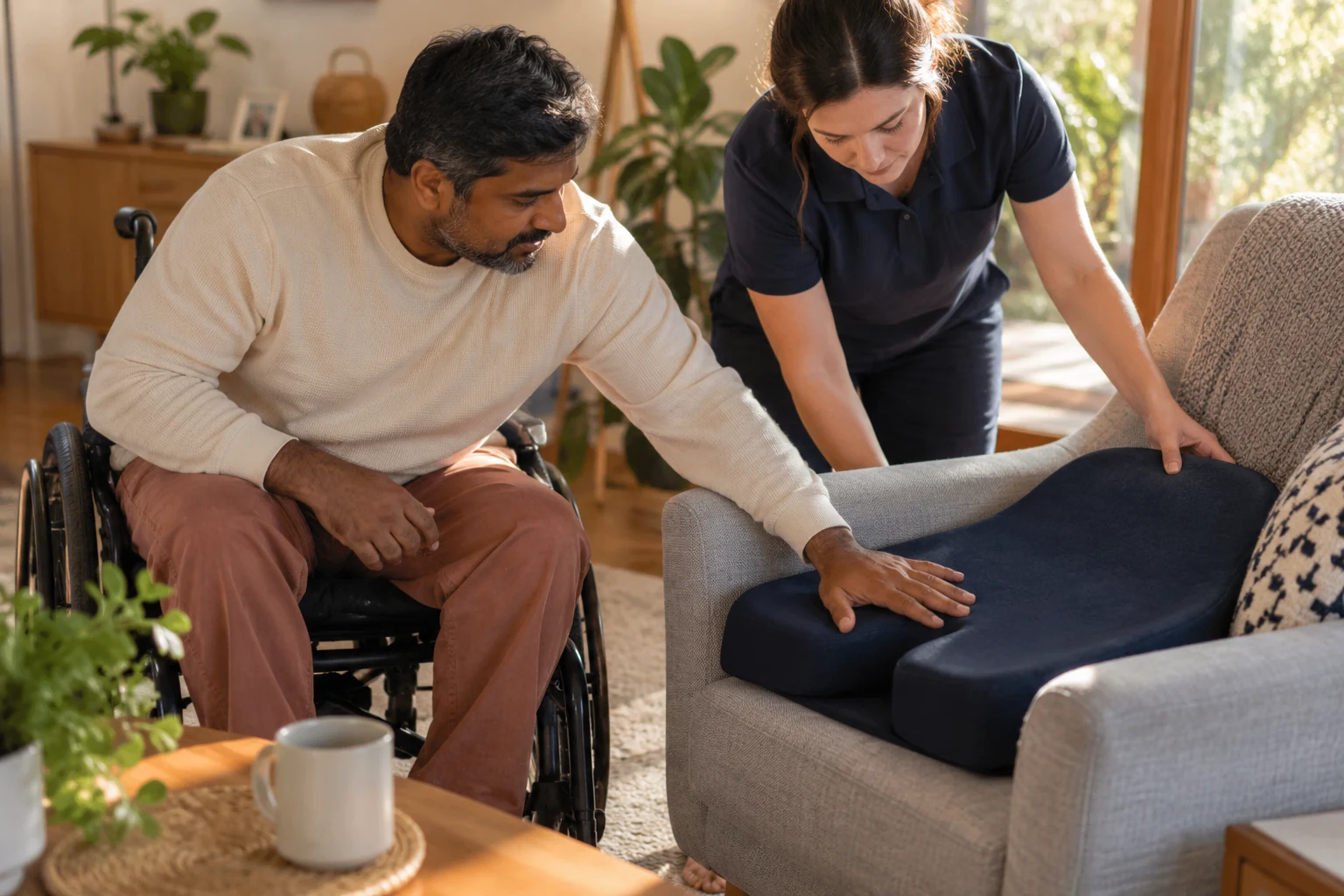
Many participants prefer to receive nursing support within their own home.

Home-based nursing may help you maintain your regular routines while receiving the clinical assistance you need.

Our nursing professionals are expected to respect:

  • Your home
  • Your privacy
  • Your dignity
  • Your routines
  • Your family relationships
  • Your cultural practices
  • Your communication preferences
  • Your personal choices

Your home remains your personal space.

Clinical Support Within Your Living Environment

Clinical Support Within Your Living Environment

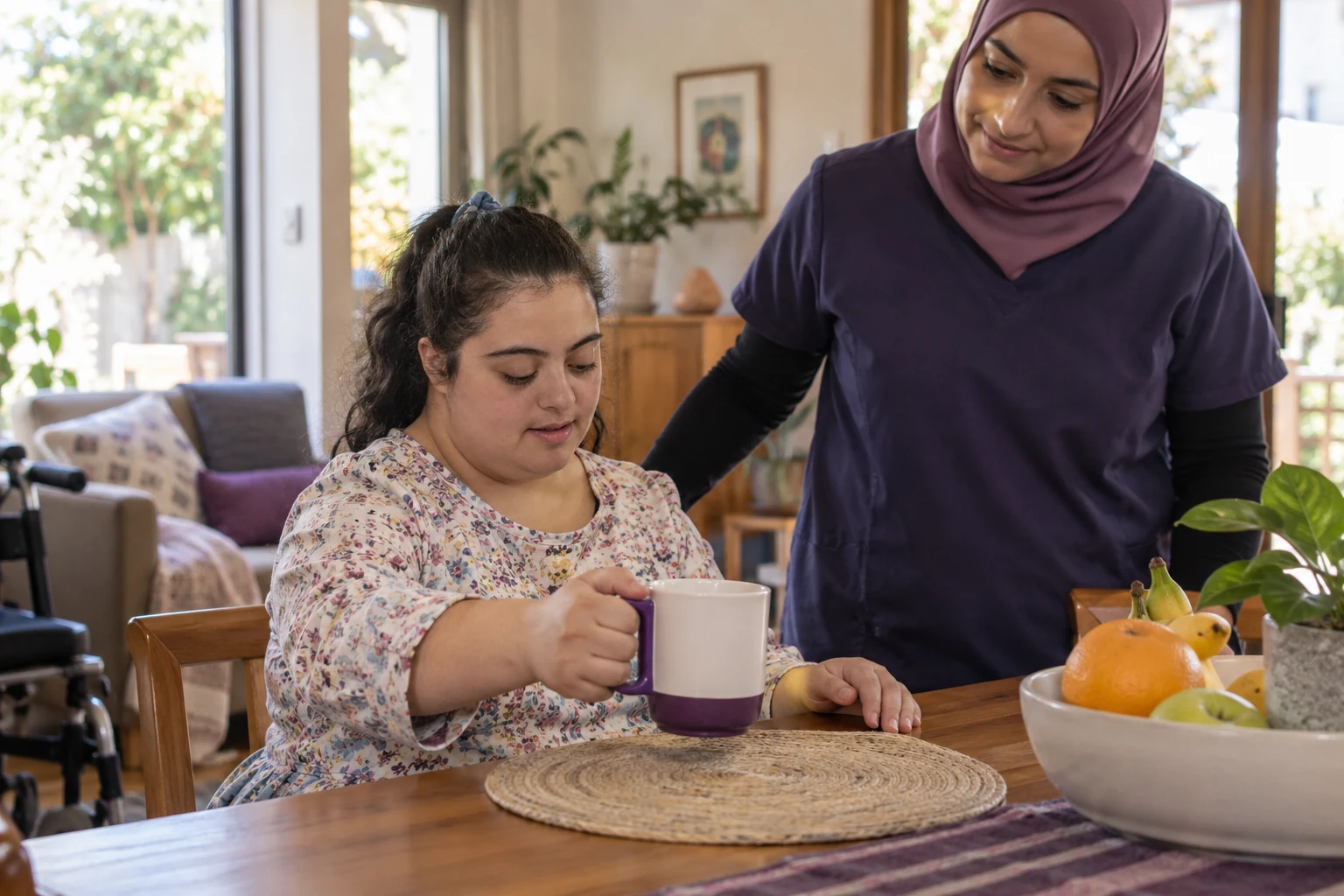
Participants living in Supported Independent Living or other supported environments may also require Community Nursing Care.

Community nursing can work alongside disability support workers to help manage more complex health needs.

Depending on the participant, this may involve:

  • Nursing assessments
  • Care plan development
  • Clinical monitoring
  • Reviewing changes in health needs
  • Support worker education
  • Communication with medical or allied health professionals
  • Clinical guidance relating to participant-specific health supports

The nursing role and support worker role remain different, but both can work together as part of a coordinated support approach.

What's the Difference?

What's the Difference?

Community Nursing Care and High Intensity Daily Personal Activities can sometimes work together, but they are different services.

Community Nursing Care

Community Nursing involves clinical services delivered by an appropriately qualified nursing professional within their professional scope.

This may include assessment, care planning, clinical intervention, monitoring and education.

High Intensity Daily Personal Activities

High intensity supports may be delivered by appropriately trained and competent disability support workers according to participant-specific plans and relevant requirements.

A nurse or other qualified health professional may sometimes assess, develop plans or provide participant-specific training associated with those supports.

Some participants may require both Community Nursing Care and High Intensity Daily Personal Activities.

Coordinated Care Matters

Coordinated Care Matters

Participants with disability-related health needs may work with several professionals.

With your consent, our nursing team can communicate and collaborate with relevant people involved in your care.

This may include:

  • General practitioners
  • Medical specialists
  • Hospital teams
  • Allied health professionals
  • Physiotherapists
  • Occupational therapists
  • Speech pathologists
  • Dietitians
  • Continence professionals
  • Support Coordinators
  • Disability support workers
  • Family members
  • Carers
  • Nominees
  • Other relevant health professionals

Good communication can help reduce gaps and create more consistent support.

You remain at the centre of the care team.

Clear Guidance for Consistent Support

Clear Guidance for Consistent Support

Some participants require individual clinical or nursing care plans.

Depending on the participant's needs, a care plan may describe:

  • The participant's health condition
  • Nursing requirements
  • Required procedures
  • Equipment
  • Monitoring requirements
  • Risks
  • Warning signs
  • Infection prevention measures
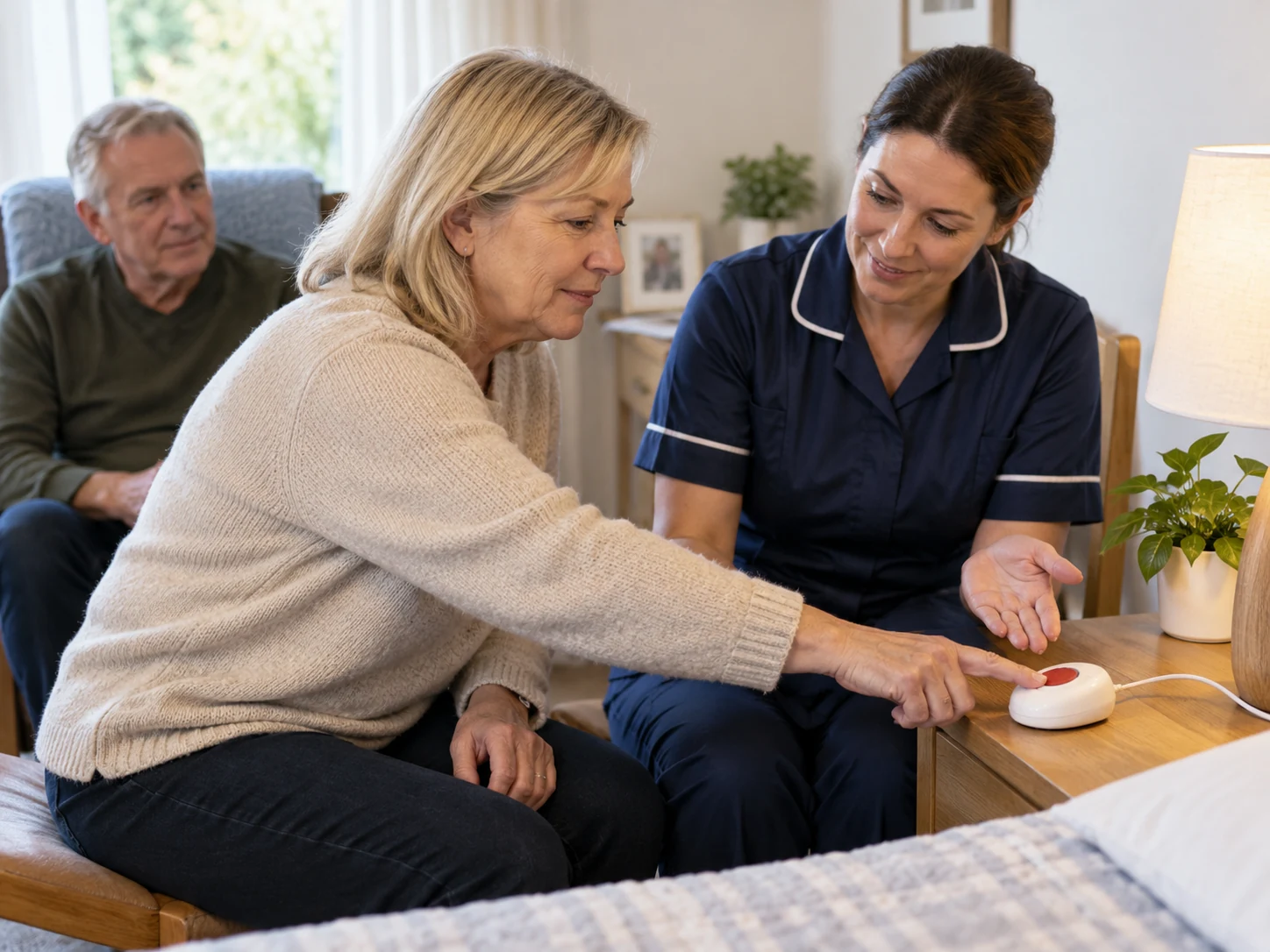
  • Emergency procedures
  • Escalation pathways
  • Relevant contact details
  • Review requirements

Care plans help ensure that the people supporting the participant understand what needs to happen and when.

Plans should be reviewed when the participant's health needs or circumstances change.

Recognising Changes Early

Recognising Changes Early

A participant's health needs may change over time.

Community nursing can help identify and respond to changes in disability-related health needs.

Depending on the participant, nurses may monitor changes relating to:

  • Skin integrity
  • Wounds
  • Continence
  • Nutrition
  • Hydration
  • Respiratory function
  • Blood glucose
  • Seizure activity
  • Pain or discomfort
  • Mobility
  • General health presentation
  • Clinical equipment
  • Other participant-specific indicators

Where concerns are identified, appropriate escalation or referral to other health professionals may be required.

Safe Nursing Support

Safe Nursing Support

Community Nursing Care requires appropriate clinical oversight and professional accountability.

Our approach includes consideration of:

  • Clinical assessment
  • Professional scope of practice
  • Participant-specific risk
  • Infection prevention
  • Documentation
  • Care planning
  • Medication-related safety where relevant
  • Equipment safety
  • Clinical escalation
  • Incident reporting
  • Communication with other professionals
  • Review of changing needs

The participant's safety and wellbeing remain central to the service.

You Have a Voice in Your Care

You Have a Voice in Your Care

Receiving nursing support does not mean losing control over your decisions.

You should be involved in discussions about:

  • Your health support needs
  • Your care routines
  • Your preferences
  • Your goals
  • Your privacy
  • Your communication
  • Who is involved in your care
  • How information is shared
  • Your cultural needs
  • Changes to your support

We aim to provide information in a way that helps you understand your options and participate in decisions about your care.

Clear Information for the People Supporting You

Clear Information for the People Supporting You

Families and carers may play an important role in a participant's health support.

Where the participant chooses to involve them, our nursing team can work with families and carers to help build understanding and confidence.

This may include:

  • Explaining relevant care routines
  • Supporting consistent approaches
  • Discussing changes in health needs
  • Providing appropriate education
  • Clarifying escalation procedures
  • Supporting communication with other services

The participant's consent, privacy and choices remain central.

Understanding What the NDIS Can Support

Understanding What the NDIS Can Support

Community Nursing Care through the NDIS is intended to address eligible disability-related health needs.

It is not designed to replace services that are normally provided through Australia's mainstream health system.

For example, mainstream health services generally remain responsible for areas such as:

  • Emergency medical treatment
  • Hospital services
  • Ambulance services
  • General medical care
  • Treatment ordinarily provided by a GP or specialist
  • Other healthcare that is not disability-related

If you are unsure whether a nursing support can be funded through your NDIS plan, speak with your NDIS contact or our team about your circumstances.

Is Community Nursing Relevant to You?

Is Community Nursing Relevant to You?

Community Nursing Care may be appropriate for eligible NDIS participants who:

  • Have disability-related health support needs
  • Require regular nursing assessment
  • Need clinical monitoring
  • Require individual nursing care plans
  • Have wound or pressure care needs
  • Require continence-related nursing support
  • Need disability-related diabetes support
  • Have respiratory support needs
  • Require clinical support associated with enteral feeding
  • Need catheter-related nursing support
  • Require nursing input alongside SIL
  • Need participant-specific health education
  • Require clinical input for more complex support arrangements

An individual assessment is required before we confirm the nursing services appropriate for a participant.

Community Nursing Care Across Australia

Community Nursing Care Across Australia

National Disability Service Provider welcomes Community Nursing Care enquiries nationwide across Australia.

We can consider referrals from:

  • Victoria
  • New South Wales
  • Queensland
  • South Australia
  • Western Australia
  • Tasmania
  • Australian Capital Territory
  • Northern Territory

Service commencement depends on:

  • Participant location
  • Nursing support required
  • NDIS funding
  • Clinical complexity
  • Professional scope
  • Availability of appropriately qualified nursing staff
  • Required frequency of service
  • Relevant care plans and assessments
  • Our ability to safely meet the participant's needs

If an established nursing service is not currently available in your area, contact us to discuss whether a suitable arrangement can be established.

Referring a Participant for Community Nursing?

Referring a Participant for Community Nursing?

We welcome referrals from Support Coordinators, health professionals, families and other authorised members of a participant's support network.

Providing relevant clinical information helps us assess whether we can safely meet the participant's needs.

Useful information may include:

  • Participant details
  • Location
  • NDIS plan information
  • Requested nursing support
  • Relevant diagnoses
  • Disability-related health needs
  • Current nursing services
  • Relevant clinical reports
  • Medication information where applicable
  • Existing care plans
  • Wound care plans where applicable
  • Continence plans where applicable
  • Diabetes management information where applicable
  • Nutrition or feeding plans where applicable
  • Relevant risks
  • Equipment used
  • Communication requirements
  • Preferred service frequency
  • Relevant health professional details
  • Desired commencement date

Only information relevant to the participant's support should be shared.

Starting Community Nursing Care

Step 1 — Contact Us

Step 1 — Contact Us

Call 1800 896 599, email services@ndsprovider.com.au, or complete our online referral form.

Step 2 — Tell Us About the Nursing Support Required

Step 2 — Tell Us About the Nursing Support Required

We discuss the participant's disability-related health needs, current circumstances, location and NDIS plan.

Step 3 — Provide Relevant Clinical Information

Step 3 — Provide Relevant Clinical Information

Where required, we may request current reports, assessments, care plans or information from treating health professionals.

Step 4 — Nursing Assessment

Step 4 — Nursing Assessment

An appropriate nursing professional reviews the participant's needs and determines the suitable nursing service.

Step 5 — Develop the Care Arrangements

Step 5 — Develop the Care Arrangements

We confirm the nursing service, frequency, relevant plans and communication arrangements.

Step 6 — Nursing Support Begins

Step 6 — Nursing Support Begins

Services commence according to the agreed care and service arrangements.

Step 7 — Review

Step 7 — Review

The participant's nursing needs may be reviewed when circumstances change or according to the relevant care plan.

Community Nursing FAQs

Community Nursing FAQs

Community Nursing Care provides eligible disability-related nursing supports for NDIS participants who require clinical assistance as a result of their disability.

Depending on the participant's needs and service arrangements, nursing care may be provided in the participant's home, supported living environment or another suitable community setting.

Depending on clinical assessment, funding and professional scope, nursing support may include assessments, care planning, health monitoring, wound and pressure care, continence support, disability-related diabetes support, respiratory support and other eligible disability-related health needs.

We can assess enquiries relating to eligible disability-related wound and pressure care. The specific service will depend on clinical assessment, NDIS funding and nursing availability.

We can assess referrals involving disability-related continence nursing needs.

Where appropriate and within professional scope, a qualified health practitioner may provide participant-specific training or education to workers supporting particular disability-related health needs.

No. Community Nursing is clinical care delivered by an appropriately qualified nursing professional. High Intensity Daily Personal Activities may be delivered by appropriately trained disability support workers according to participant-specific plans and requirements.

Yes. Some participants receiving Supported Independent Living may also require Community Nursing Care.

No. NDIS funding generally relates to eligible disability-related health supports. Healthcare that is ordinarily the responsibility of the mainstream health system is not generally funded by the NDIS.

Yes, where the participant wants them involved or appropriate authority is in place.

National Disability Service Provider welcomes Community Nursing enquiries Australia-wide. Service commencement depends on location, clinical requirements and nursing workforce availability.

Call 1800 896 599, email services@ndsprovider.com.au, or complete our online referral form.

National Disability Service Provider

Our services are available Australia-wide, with physical offices currently located in Victoria and South Australia.

Service Addresses:

Victoria: 113/1510 Pascoe Vale, Coolaroo VIC 3048

South Australia: 97 Sir Donald Bradman Dr, Hilton SA 5033

Phone: 1800 896 599

Email: services@ndsprovider.com.au

Australia-Wide Enquiries

Nursing Support Designed Around Your Life

Nursing Support Designed Around Your Life

Your health needs are individual.

Your nursing support should be too.

Talk to our team about safe, respectful and personalised Community Nursing Care for disability-related health needs.

We welcome participant and professional referrals Australia-wide.

Email: services@ndsprovider.com.au