Assistive Products for Household Tasks

Practical Equipment for Greater Independence at Home

The right assistive product can make everyday household activities safer, easier and more manageable.

Assistive Products for Household Tasks

National Disability Service Provider provides eligible NDIS participants with access to Assistive Products for Household Tasks designed to support greater independence with everyday activities around the home.

From adapted kitchen equipment to specialised cleaning and household tools, the focus is on finding practical solutions that respond to your individual disability-related needs.

Assistive Products for Household Tasks enquiries welcome Australia-wide.

Phone: 1800 896 599

Practical Equipment. Greater Independence.

Assistive products designed to make everyday household activities more accessible.

The Right Tool Can Make Everyday Tasks Easier

Everyday household activities can involve:

  • Reaching
  • Bending
  • Gripping
  • Lifting
  • Carrying
  • Pouring
  • Cutting
  • Cleaning
  • Organising
  • Using household equipment

A disability may make some of these activities difficult, unsafe or impossible without assistance.

Assistive products can help reduce these barriers.

The right equipment may help you:

  • Complete more tasks independently
  • Reduce physical effort
  • Improve safety
  • Reduce reliance on other people
  • Participate more actively in household activities
  • Maintain everyday routines
  • Build confidence at home

The product should respond to your actual needs rather than simply adding more equipment to your home.
The Right Tool Can Make Everyday Tasks Easier
Equipment That Supports Everyday Activities at Home

Equipment That Supports Everyday Activities at Home

Assistive Products for Household Tasks are products designed to help eligible NDIS participants carry out domestic and everyday activities within the home.

Depending on the participant's disability-related needs, this may include products that assist with:

  • Preparing food and drinks
  • Cleaning
  • Dishwashing
  • Laundry
  • Gardening
  • Reaching
  • Gripping
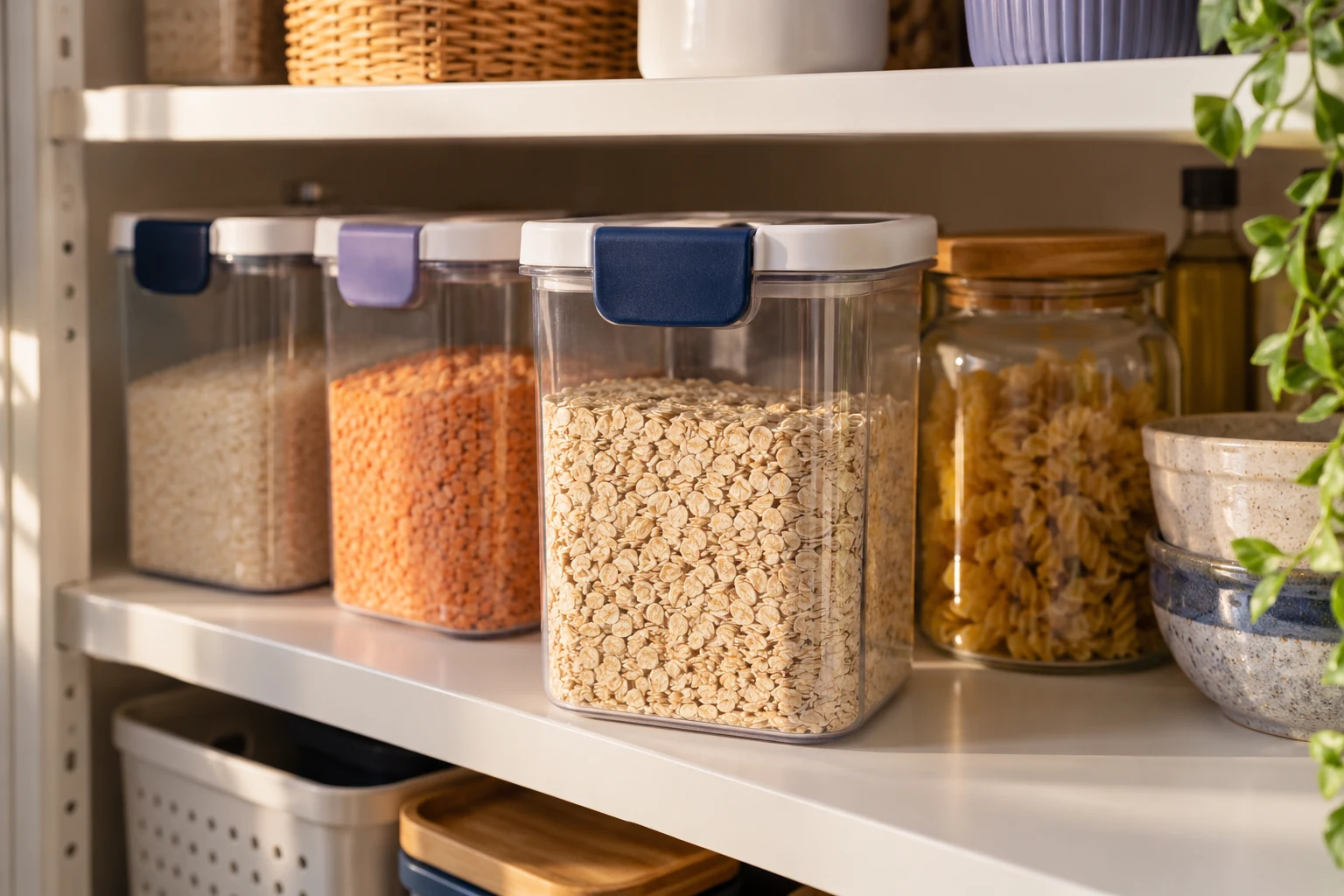
  • Household organisation
  • Operating household features
  • Completing everyday domestic tasks

Some products may be relatively simple.

Others may involve specialised equipment, modifications or additional advice before purchase.

The most appropriate solution depends on the participant's individual needs, abilities, environment and NDIS funding.

Supporting Greater Independence at Home

Supporting Greater Independence at Home

Grip

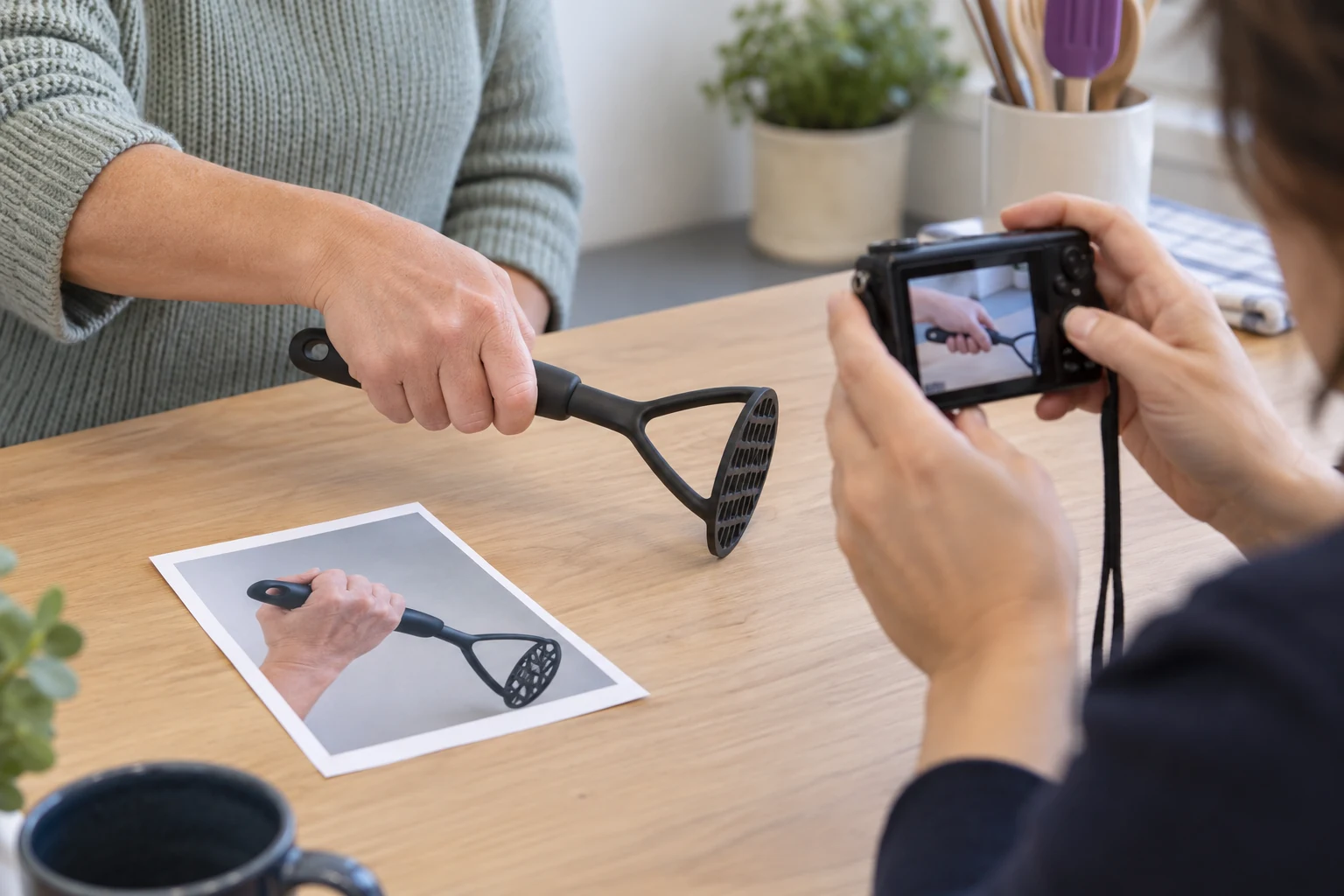
Products may provide larger, adapted or easier-to-hold handles.

Reach

Long-handled or extended equipment may reduce the need to bend or stretch.

Strength

Lightweight or adapted equipment may reduce the physical effort required.

Coordination

Specialised equipment may make tasks easier for people who experience difficulty with fine motor control.

Balance

Appropriate equipment may help reduce the need for unsafe reaching or bending.

Mobility

Products may help participants complete household activities while working within their mobility needs.

Fatigue

Equipment that reduces effort may help participants manage activities more efficiently.

Dexterity

Adapted household tools may make tasks easier for participants who have difficulty manipulating standard equipment.

Greater Independence in the Kitchen

Greater Independence in the Kitchen

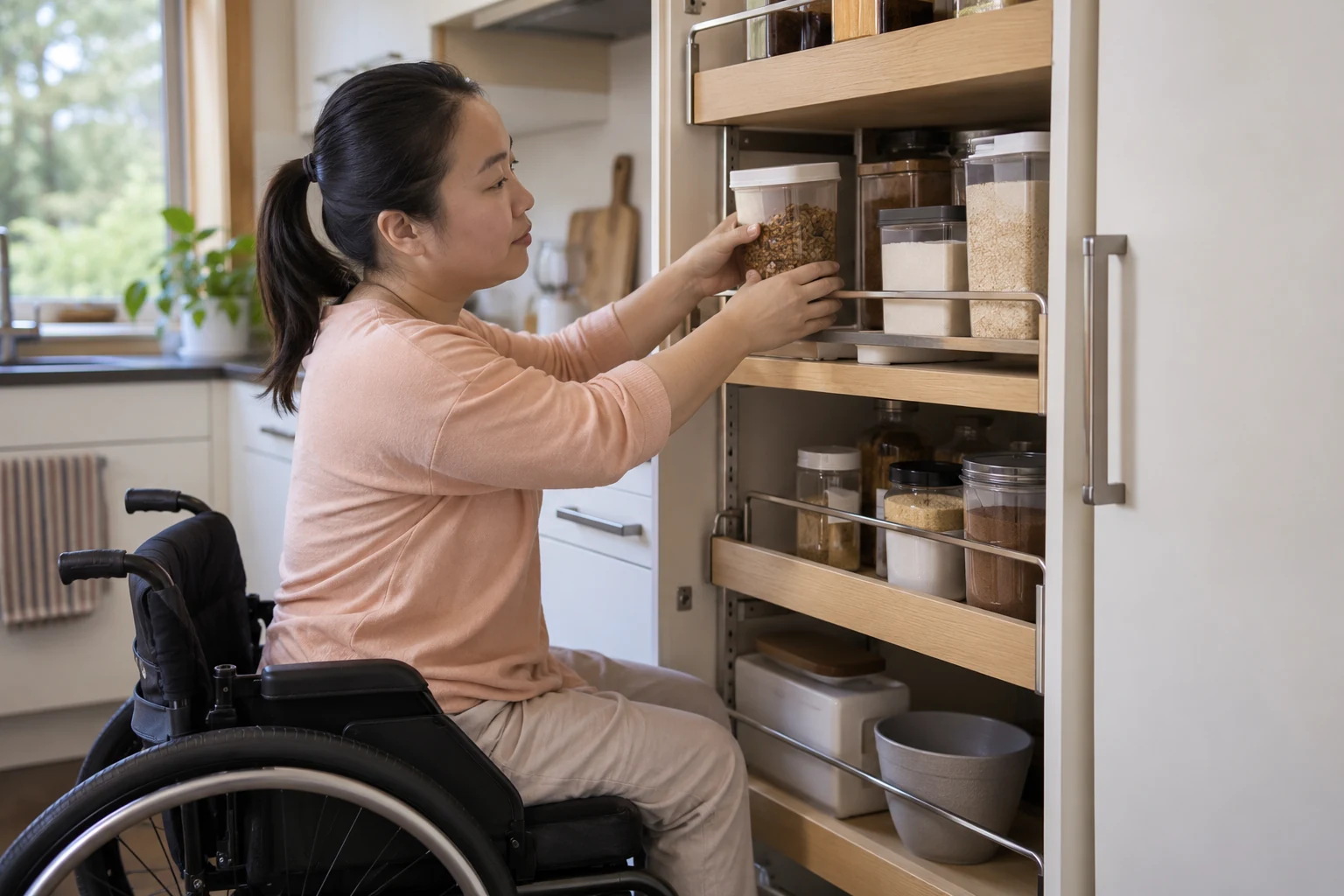
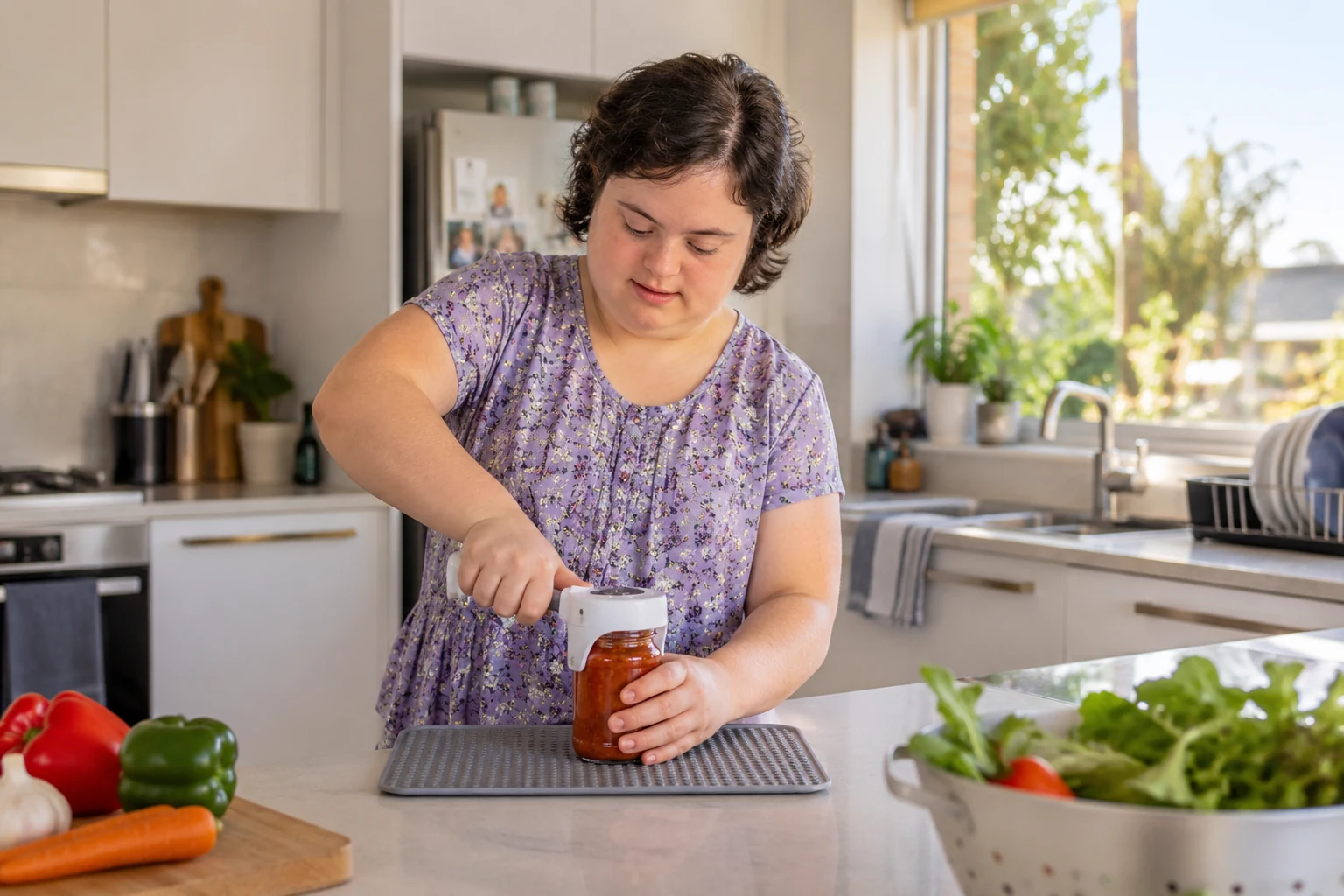
Preparing food can involve many physical and fine motor skills.

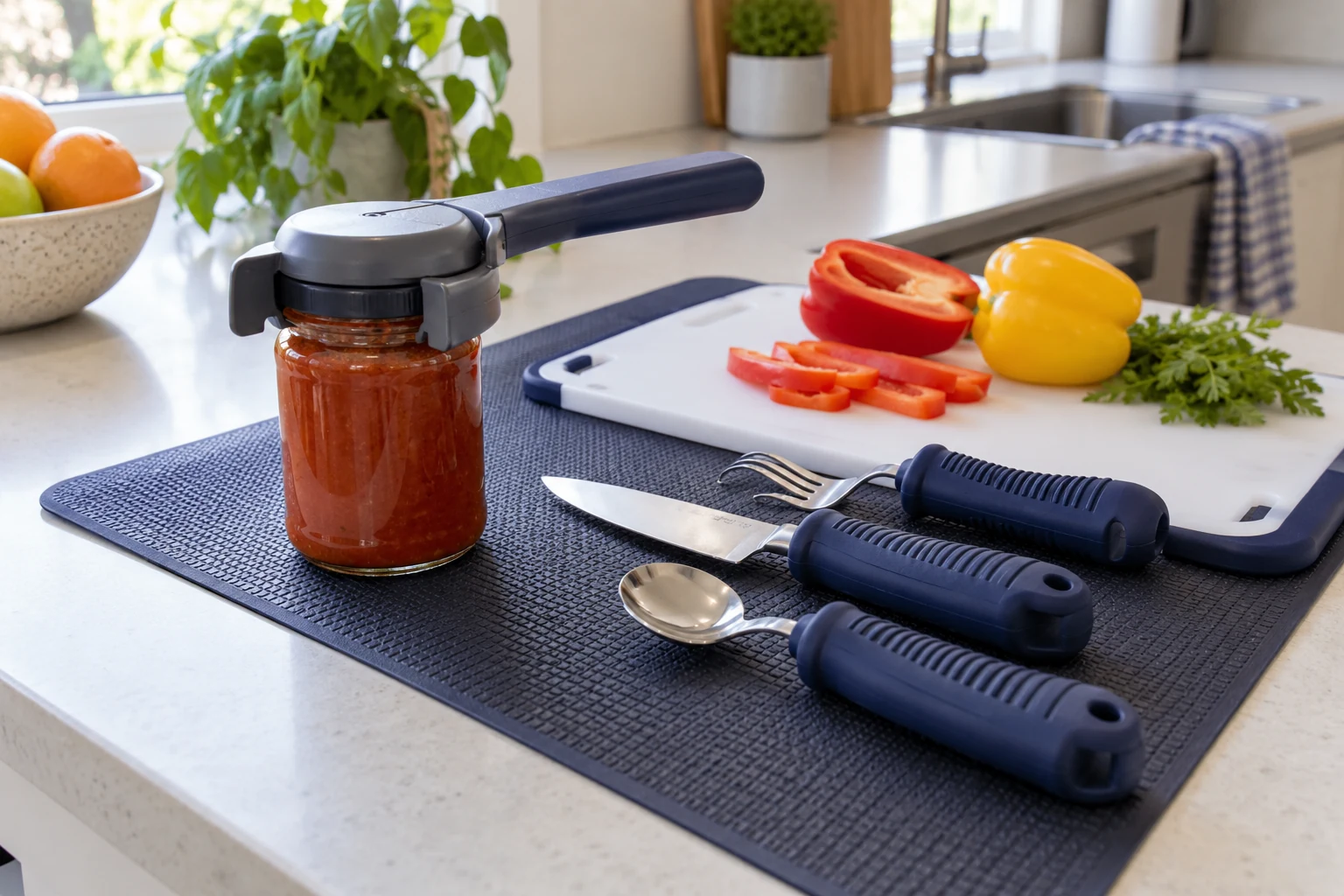
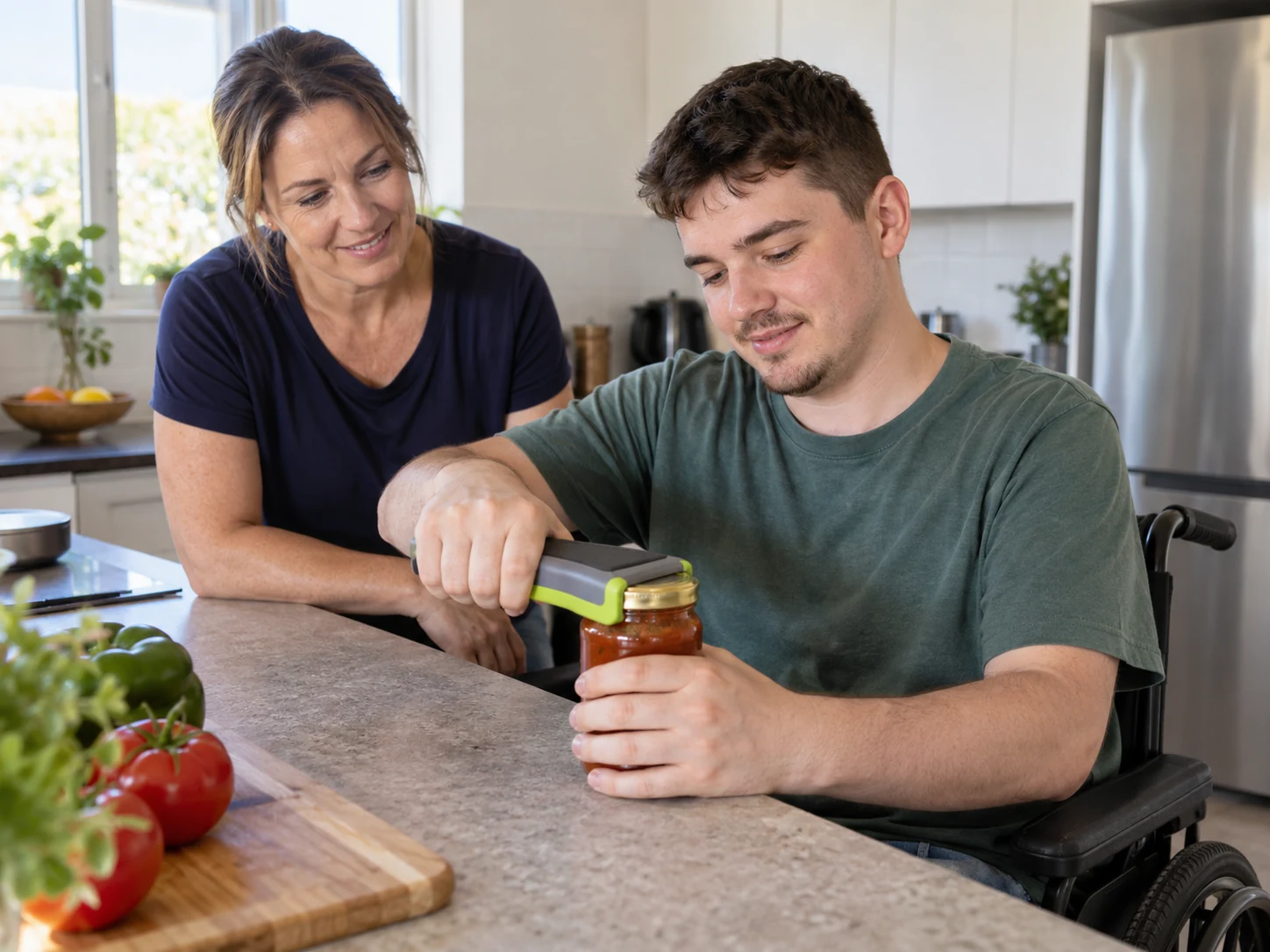
Depending on individual needs, assistive products may include items such as:

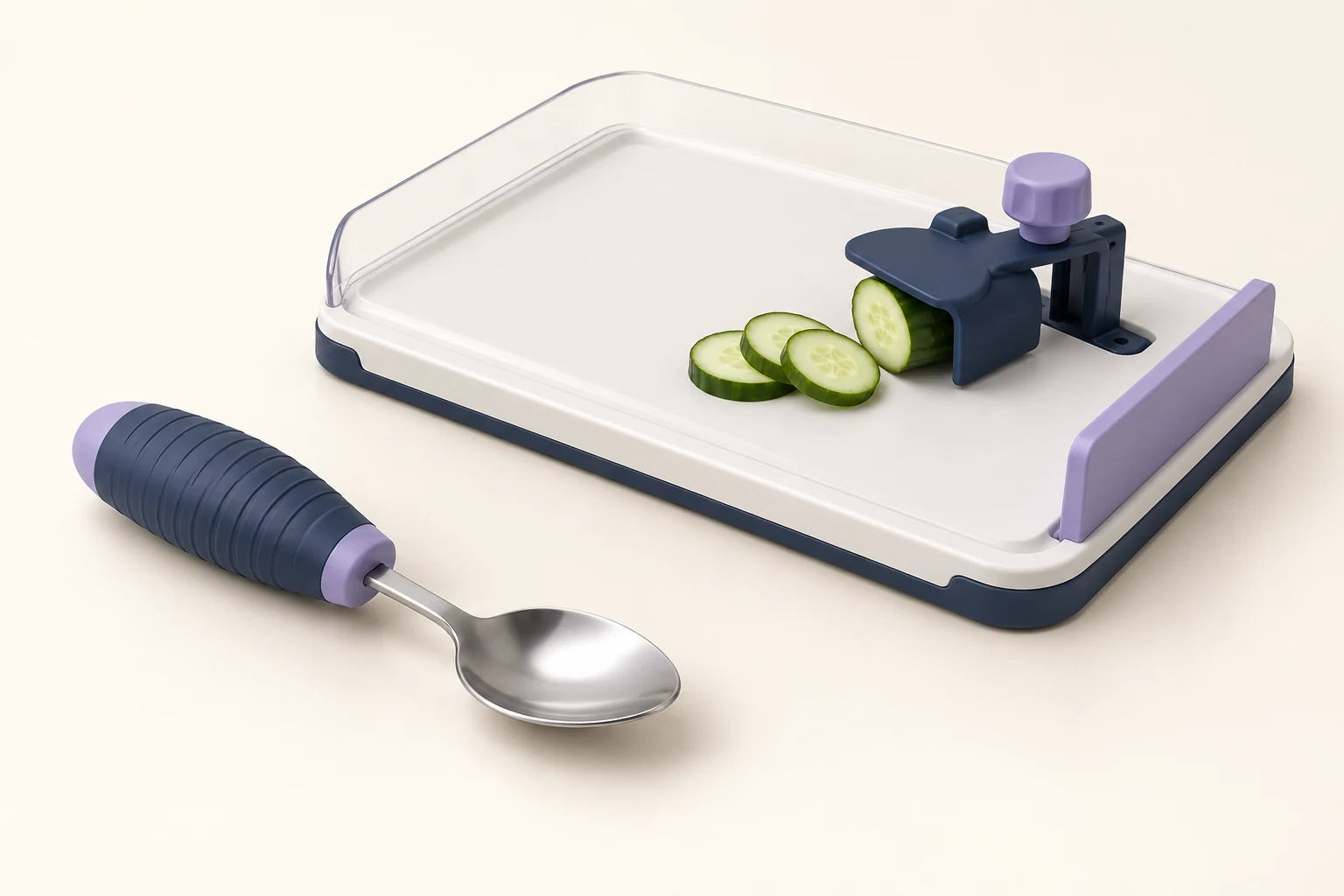
  • Adapted chopping boards
  • Modified kitchen utensils
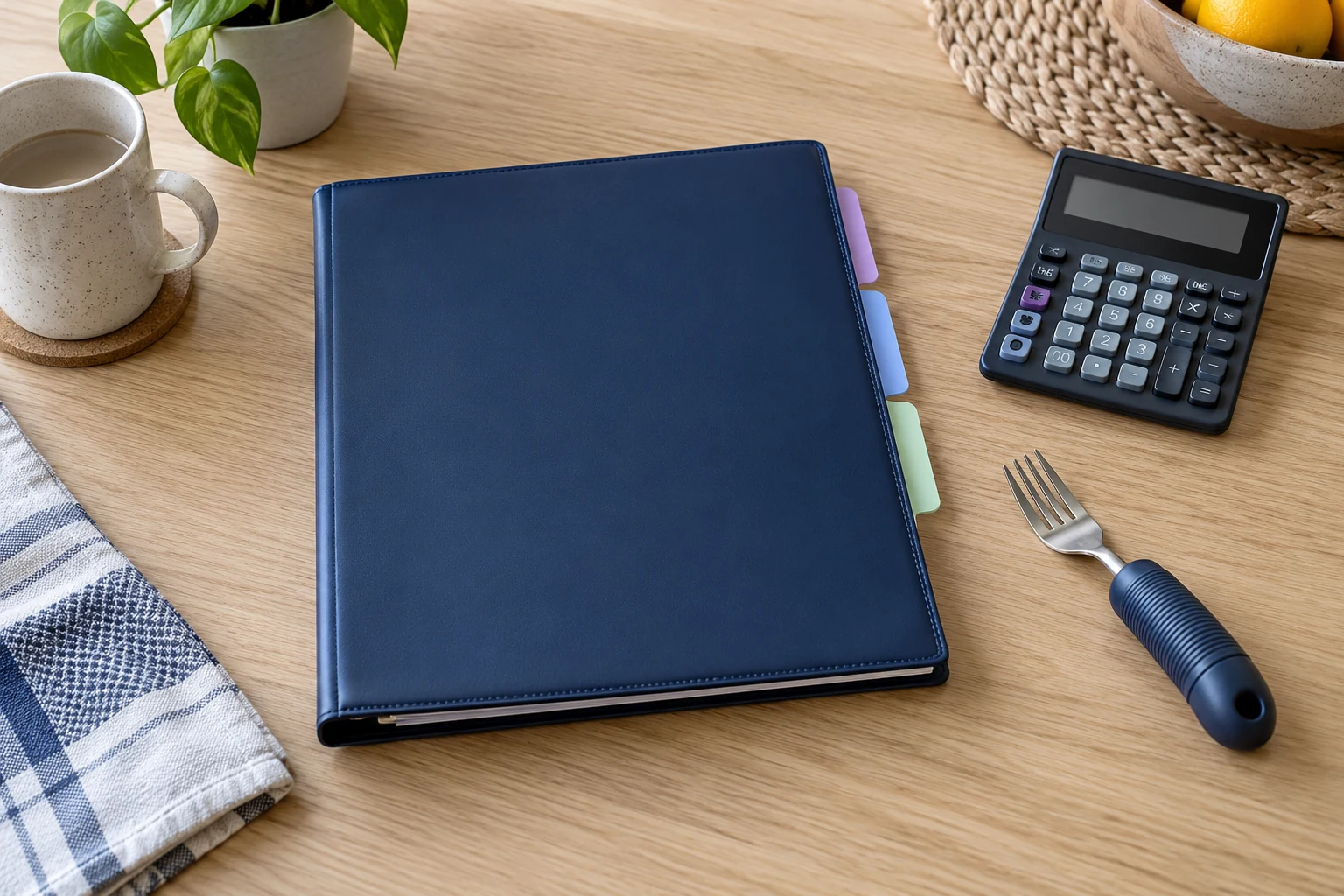
  • Easy-grip utensils
  • Specialised cutting tools
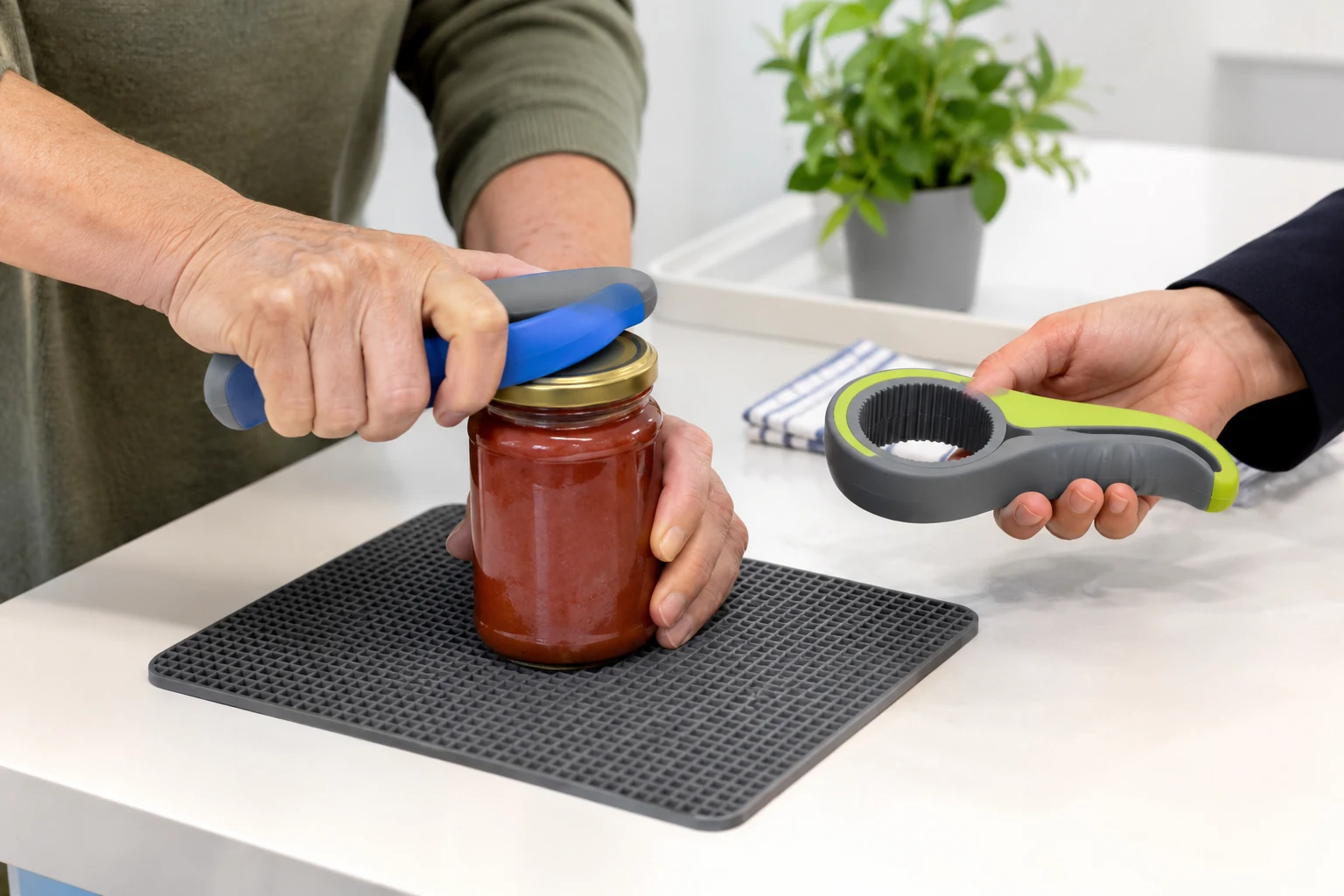
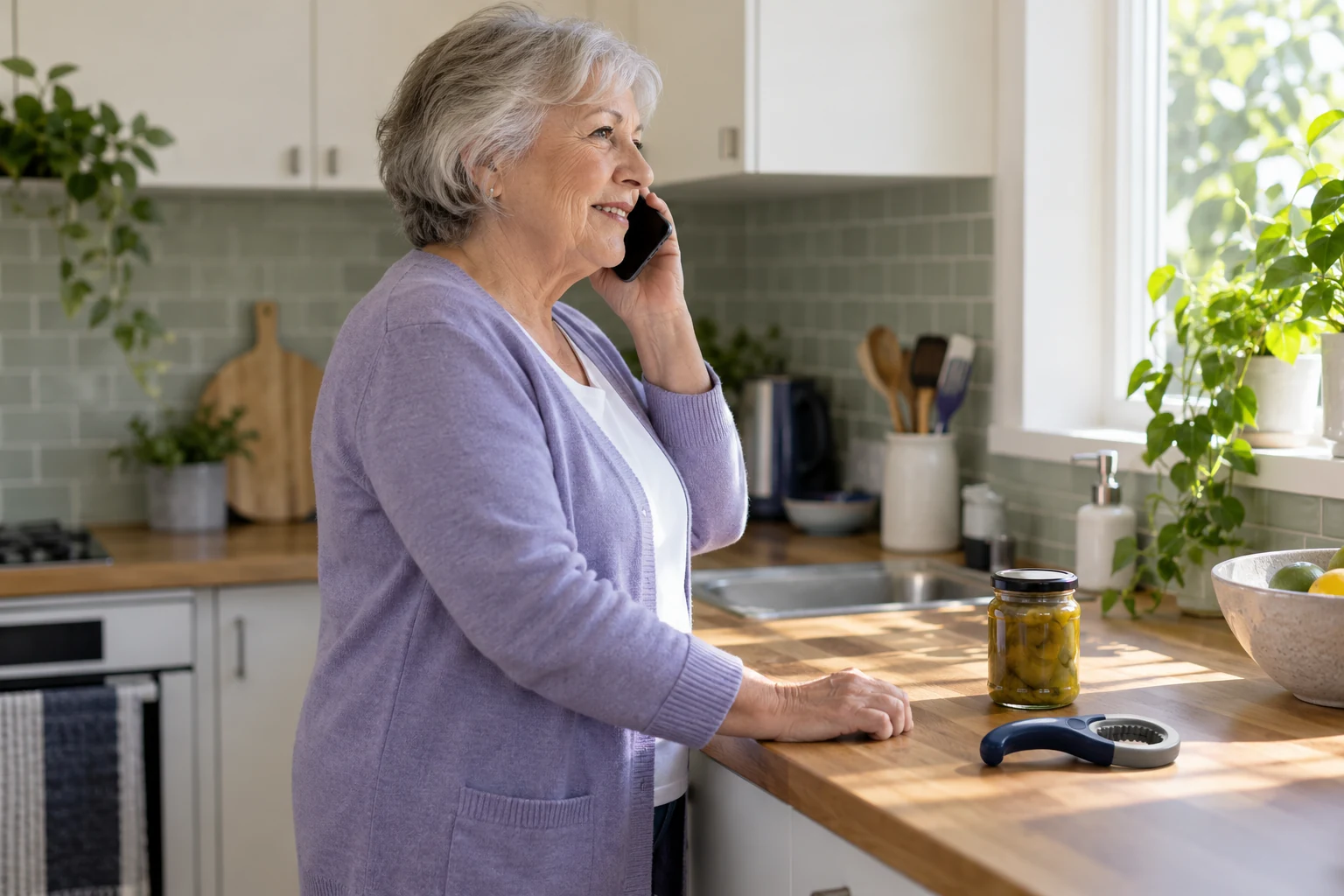
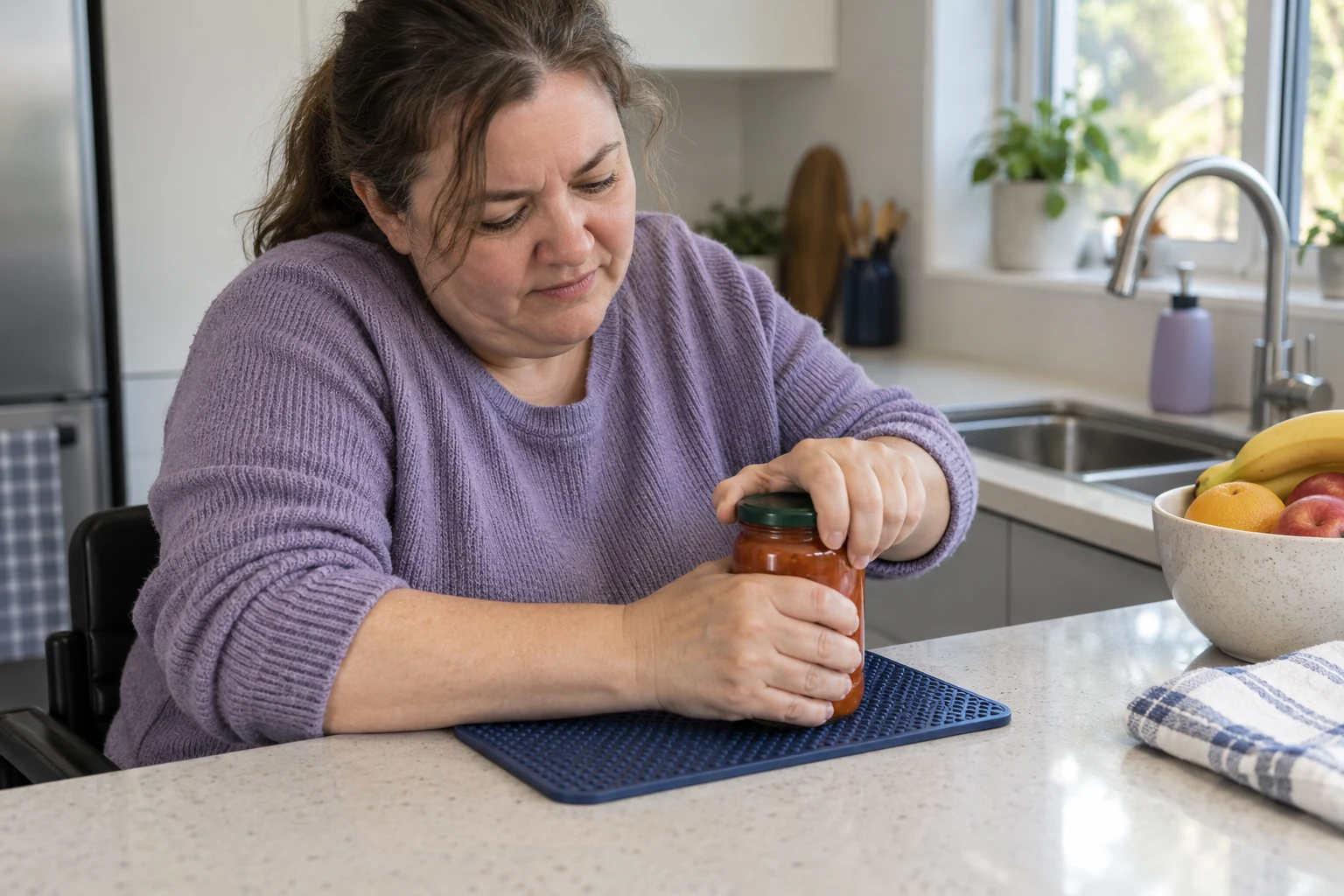
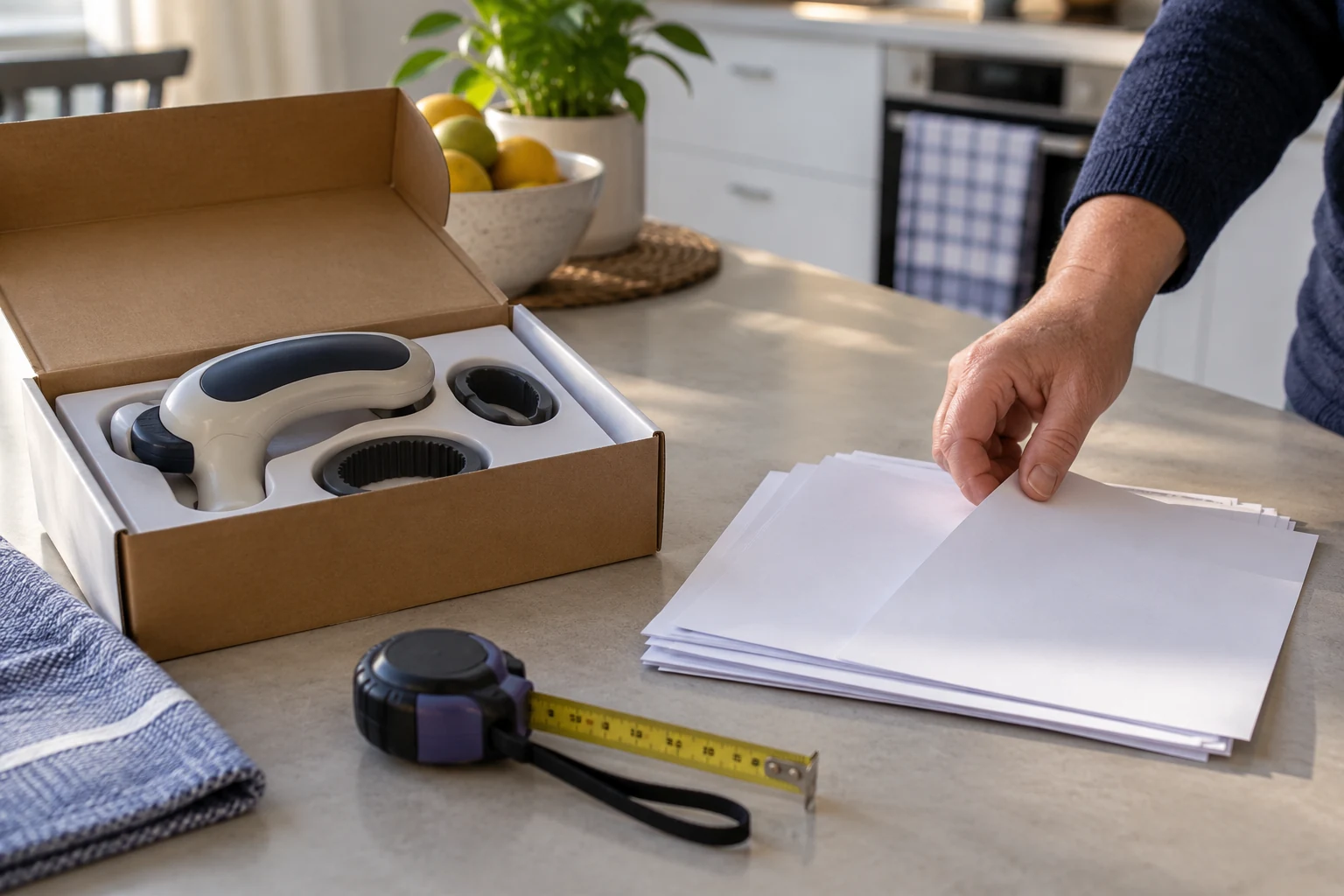
  • Jar or bottle opening aids
  • Non-slip preparation surfaces
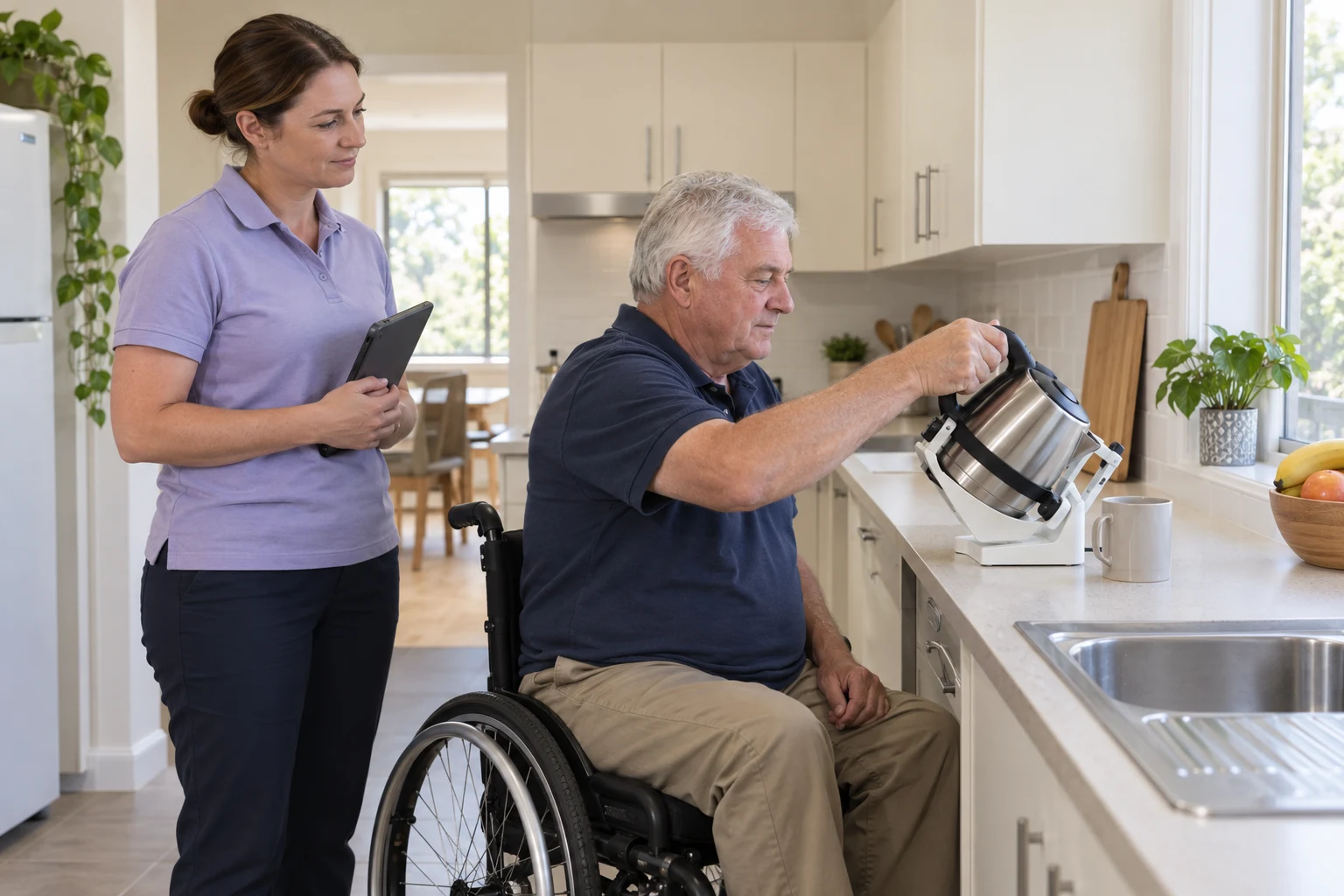
  • Pouring aids
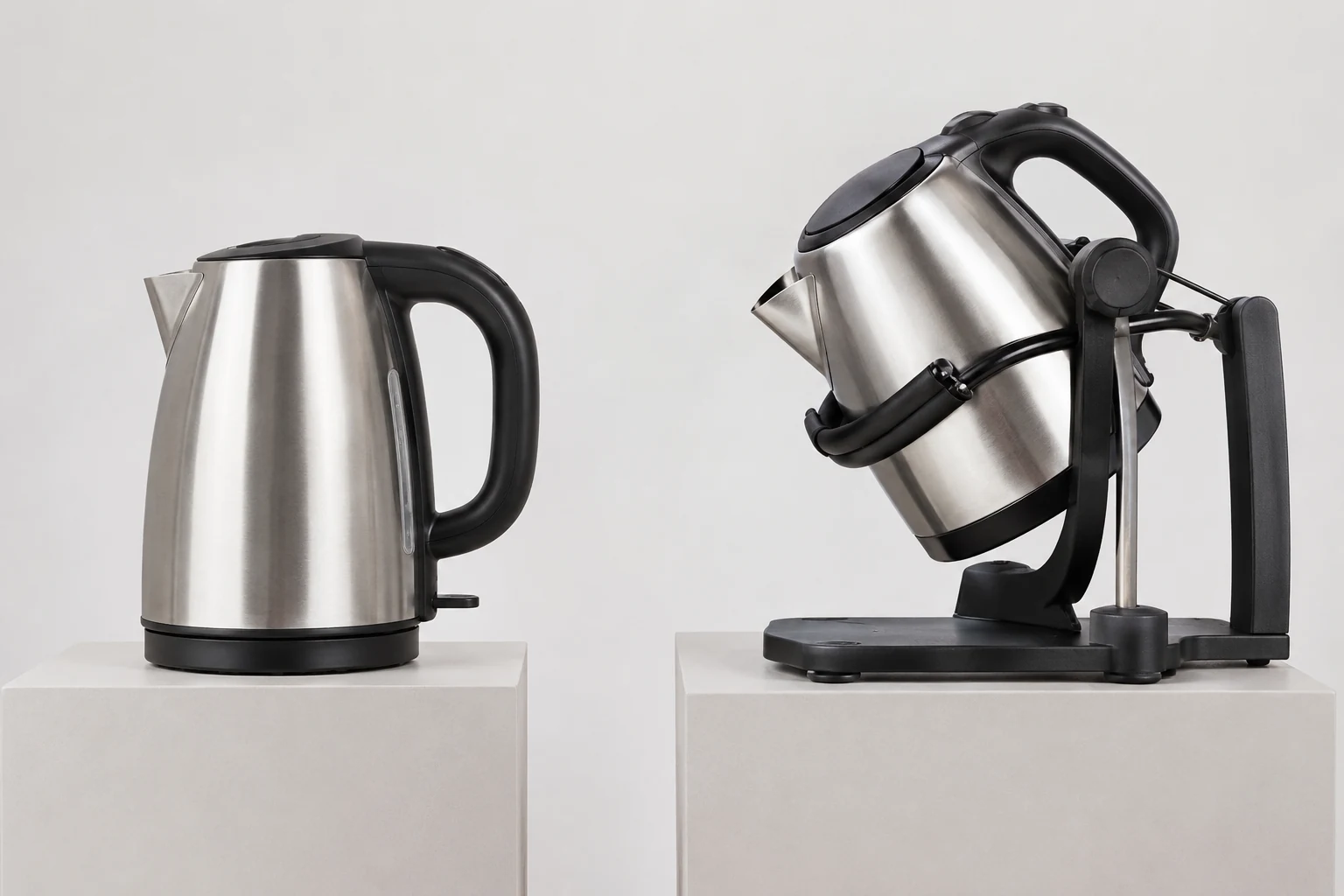
  • Kettle tipping devices
  • Reaching aids
  • Equipment designed to stabilise food or kitchen items
  • Other specialised kitchen tools

These products may help participants take a more active role in preparing meals and drinks.

The specific product should be selected according to the person's functional needs and safety requirements.

Making Household Cleaning More Manageable

Making Household Cleaning More Manageable

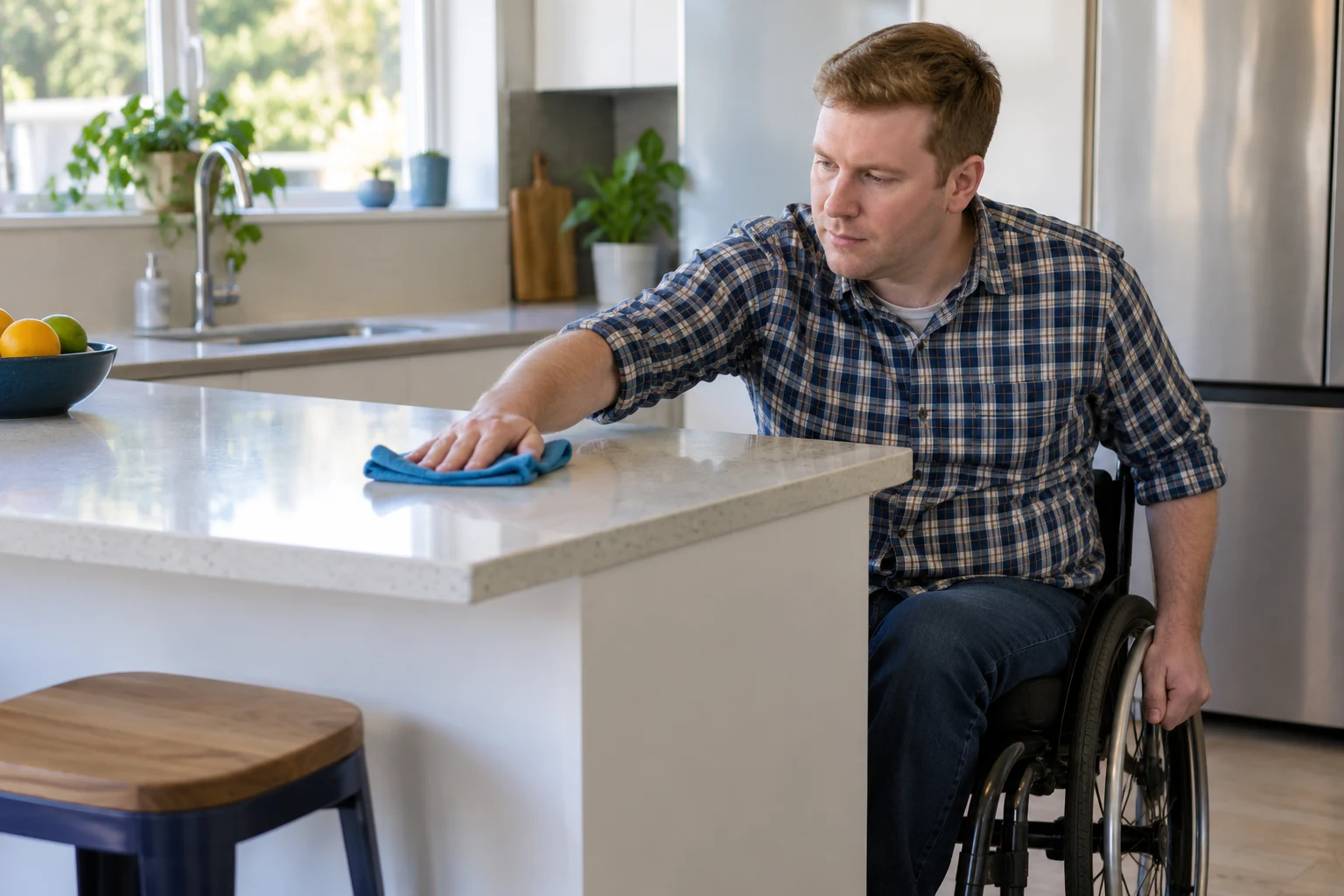
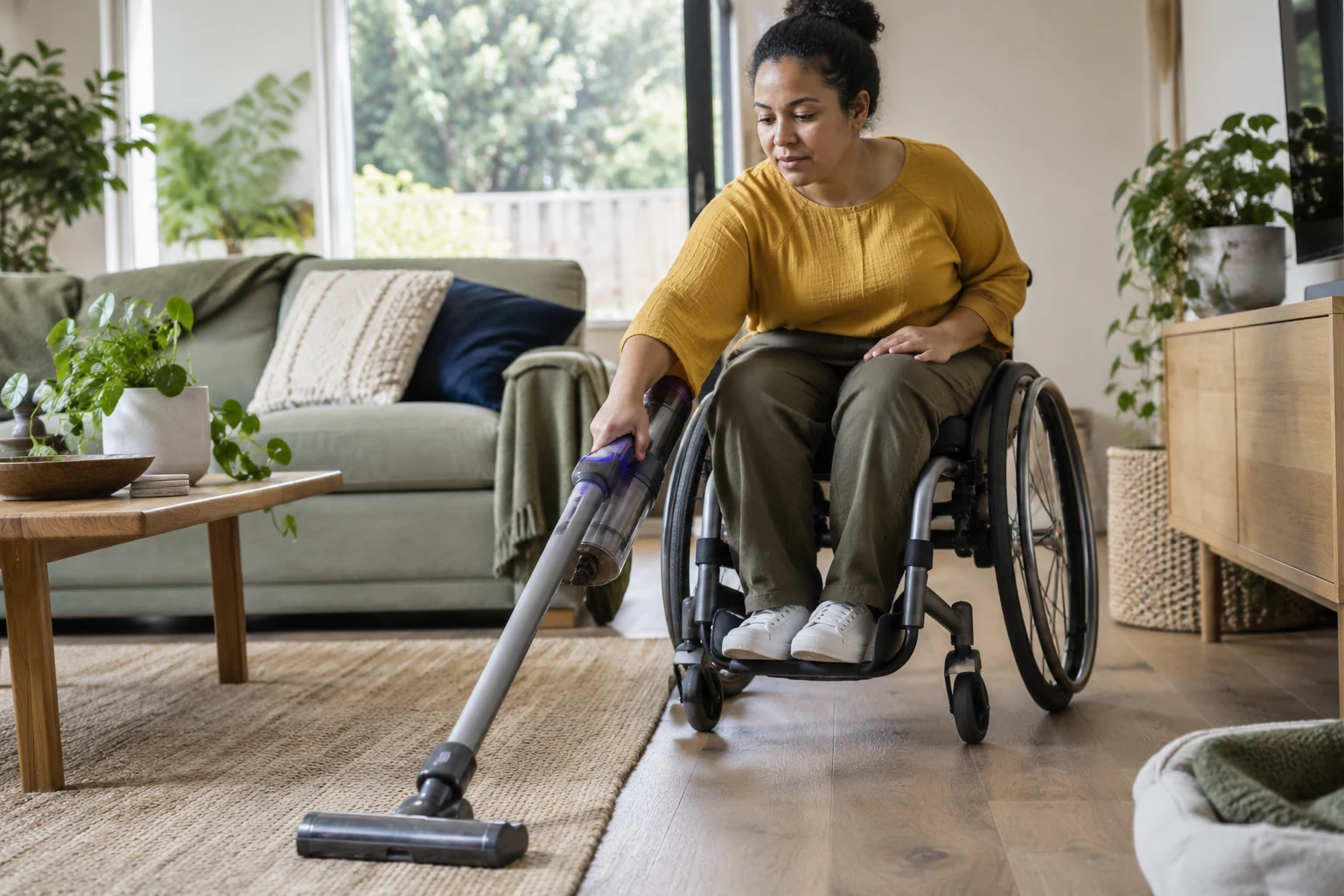
Cleaning can require bending, reaching, gripping and repetitive movement.

Assistive cleaning products may include:

  • Long-handled dustpans
  • Adapted brooms
  • Angled brushes
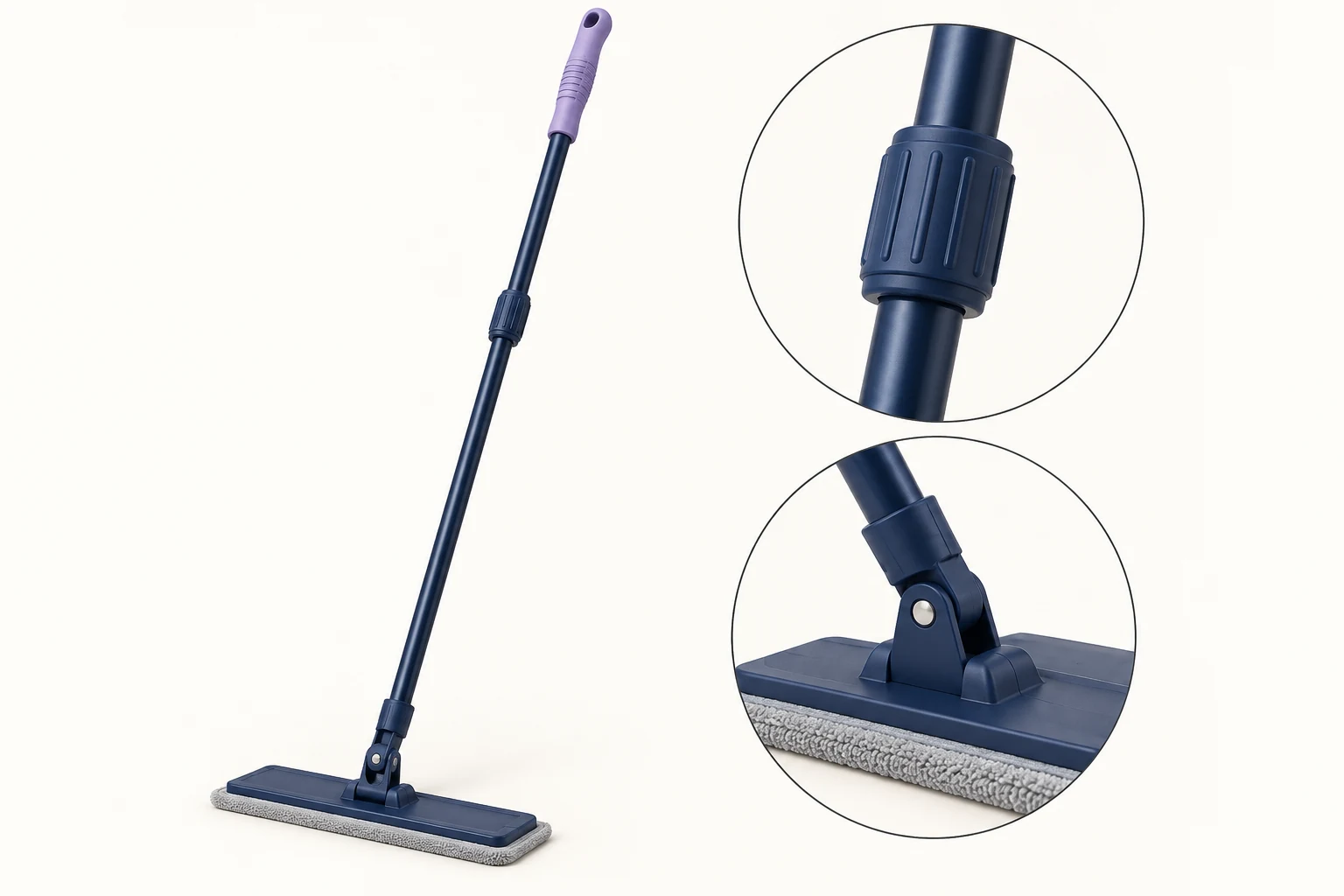
  • Lightweight mops
  • Adapted buckets
  • Reaching tools
  • Trigger-operated spray bottles
  • Adjustable-height cleaning equipment
  • Easy-grip cleaning tools
  • Other specialised cleaning equipment

These products may allow some participants to complete parts of household cleaning more independently or with less physical effort.

Practical Assistance in the Kitchen

Practical Assistance in the Kitchen

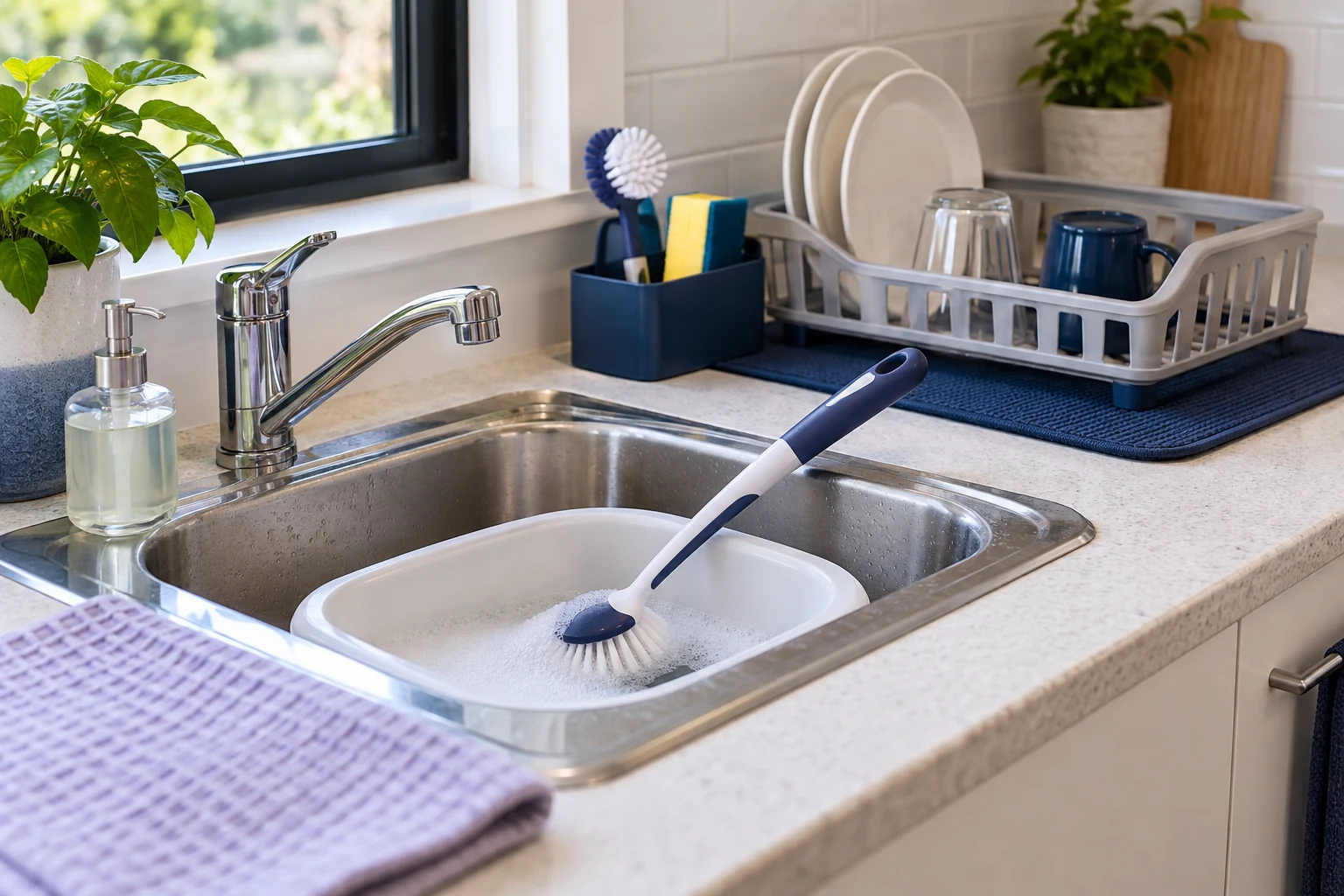
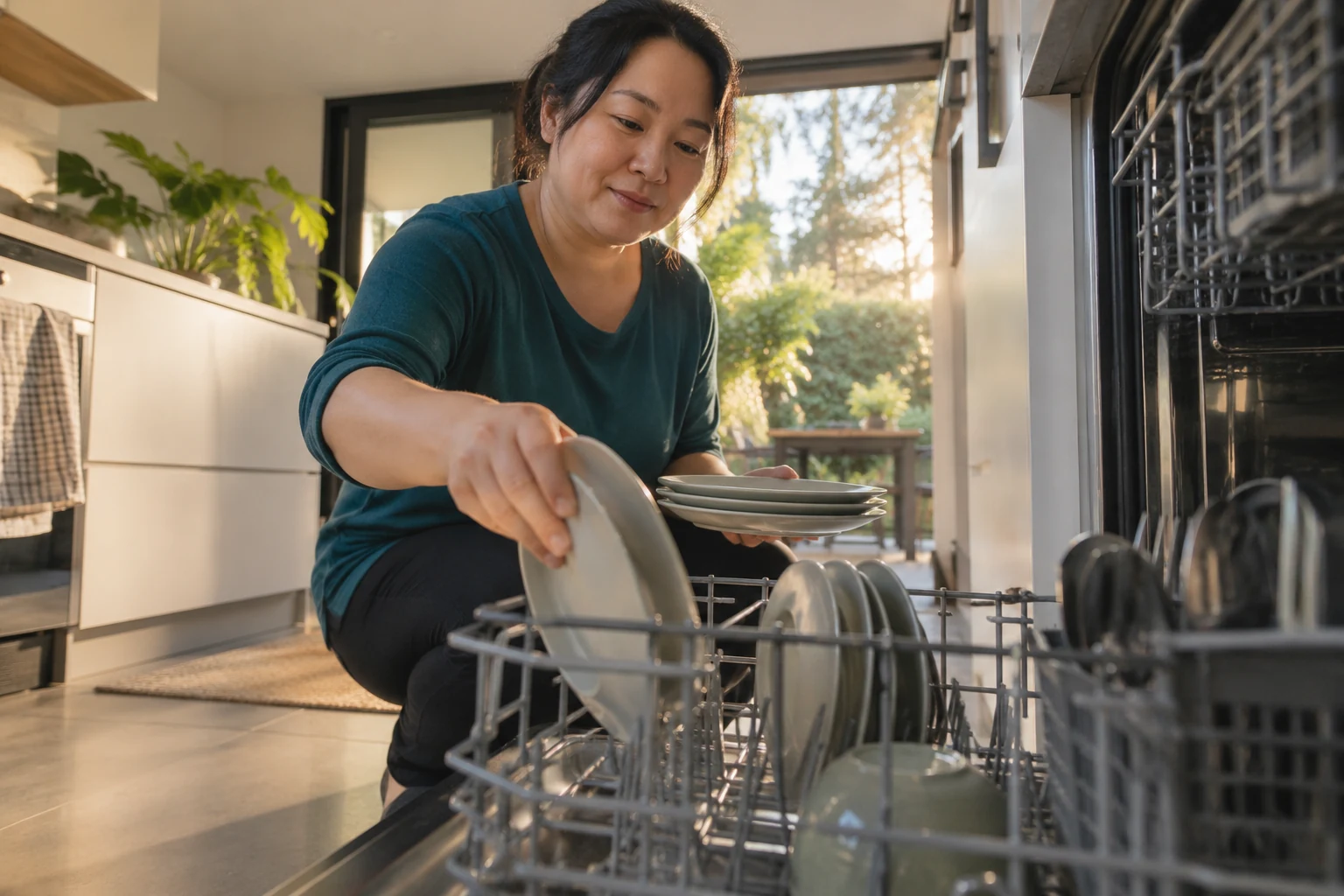
Assistive products may also support participants with washing and managing dishes.

Depending on individual needs, products may include:

  • Long-handled washing tools
  • Easy-grip brushes
  • Adapted sponges
  • Modified dish racks
  • Adapted washing-up equipment
  • Non-slip surfaces
  • Other specialised products

The aim is to make the activity more accessible and manageable for the participant.

Make Clothing and Linen Tasks Easier

Make Clothing and Linen Tasks Easier

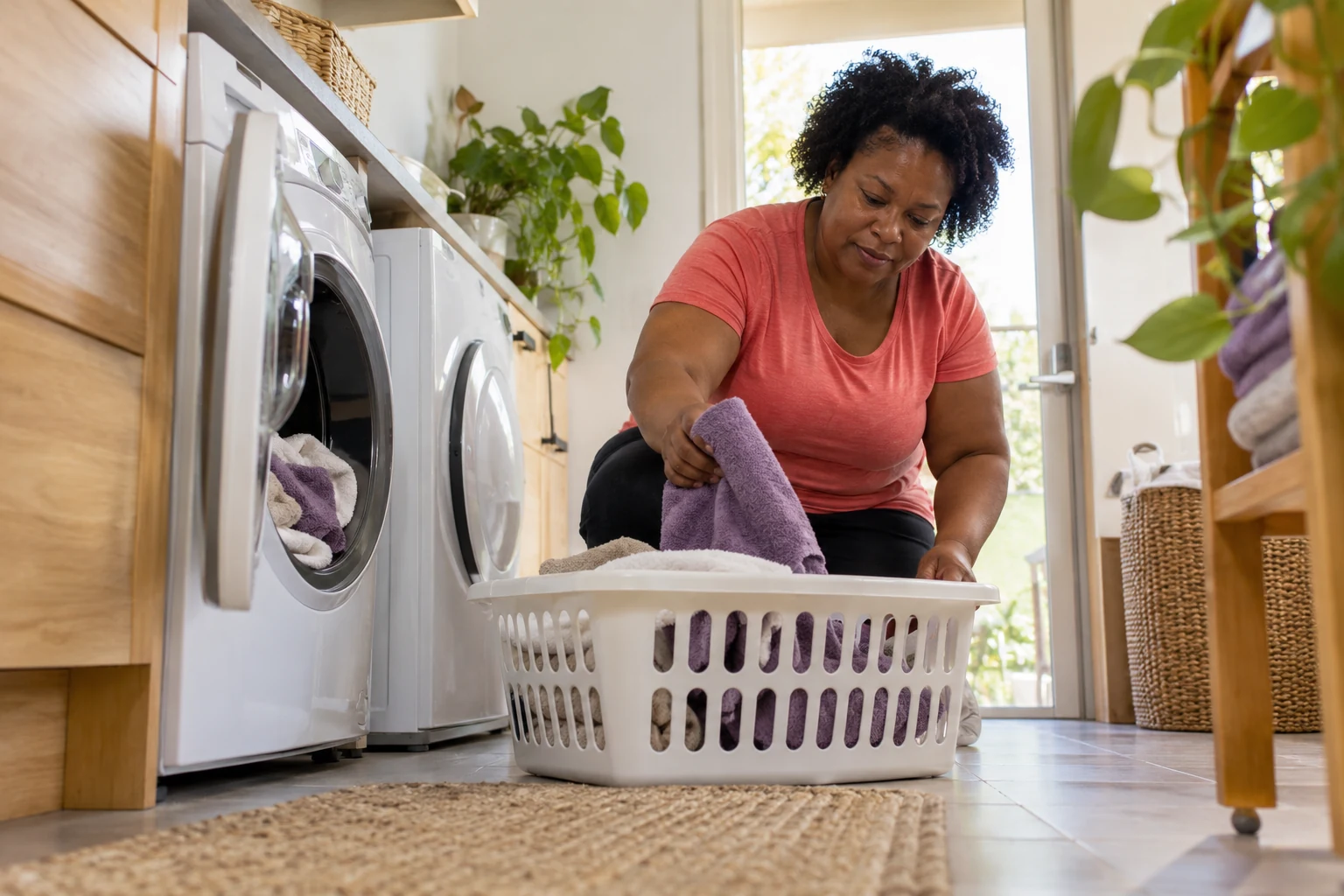
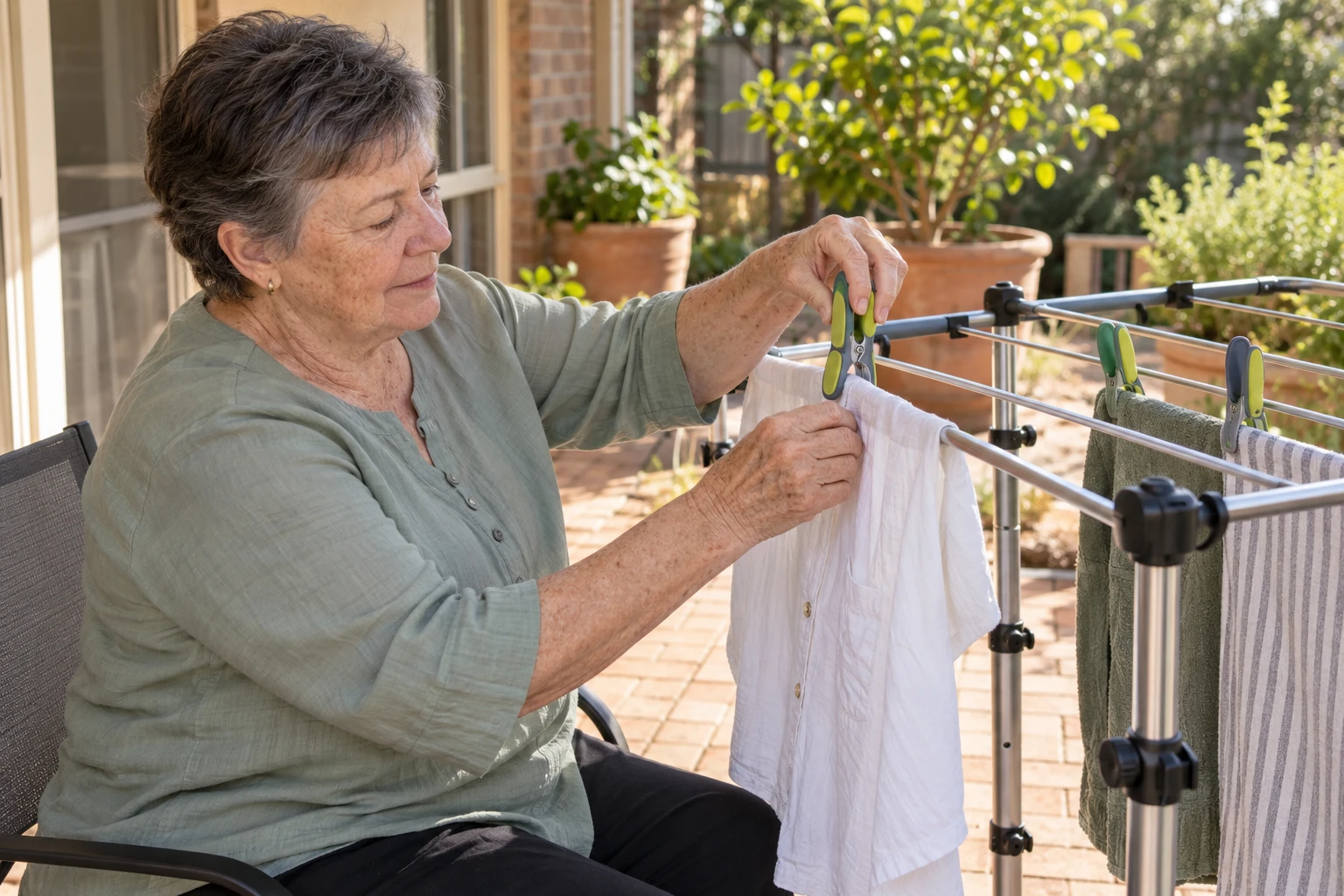
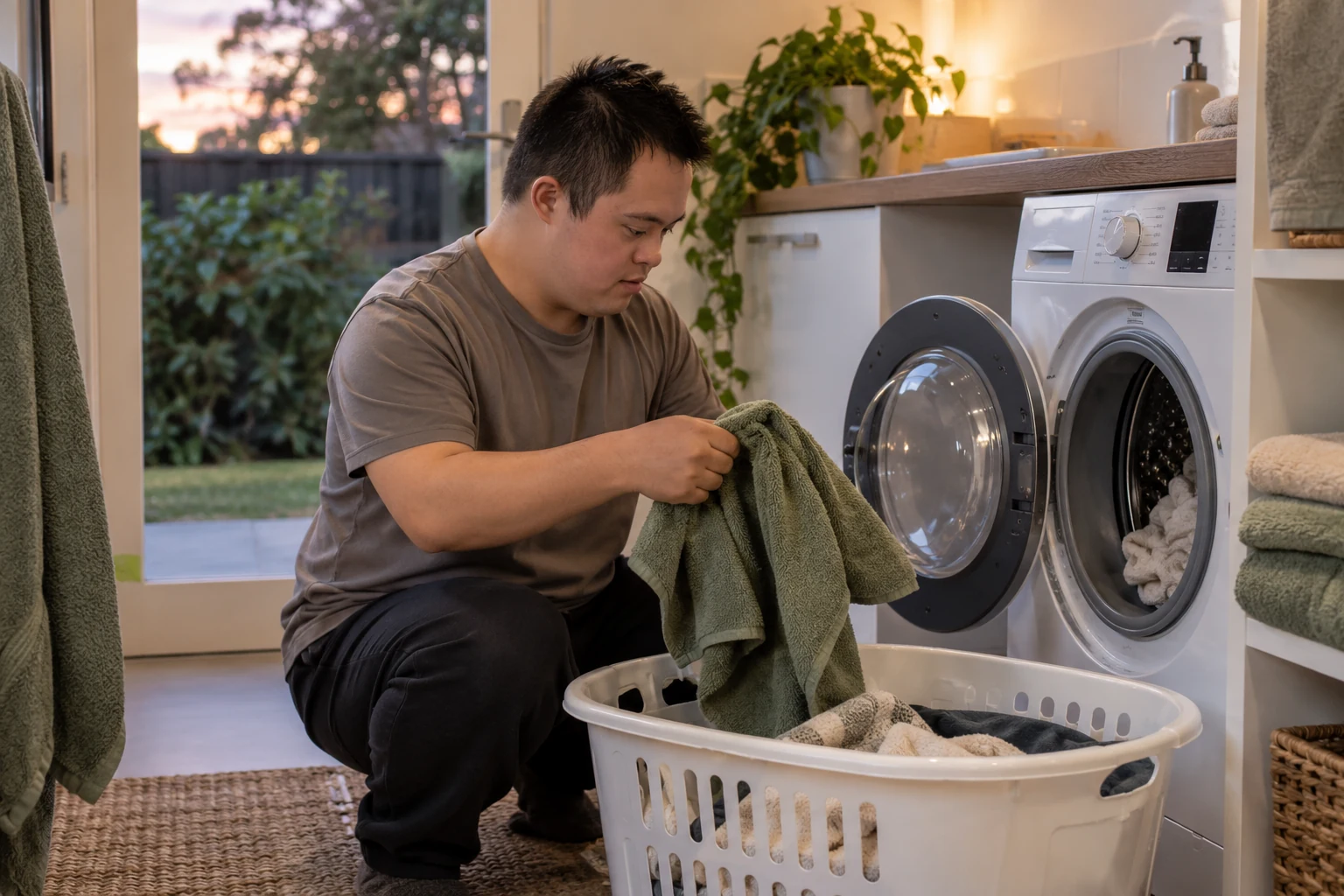
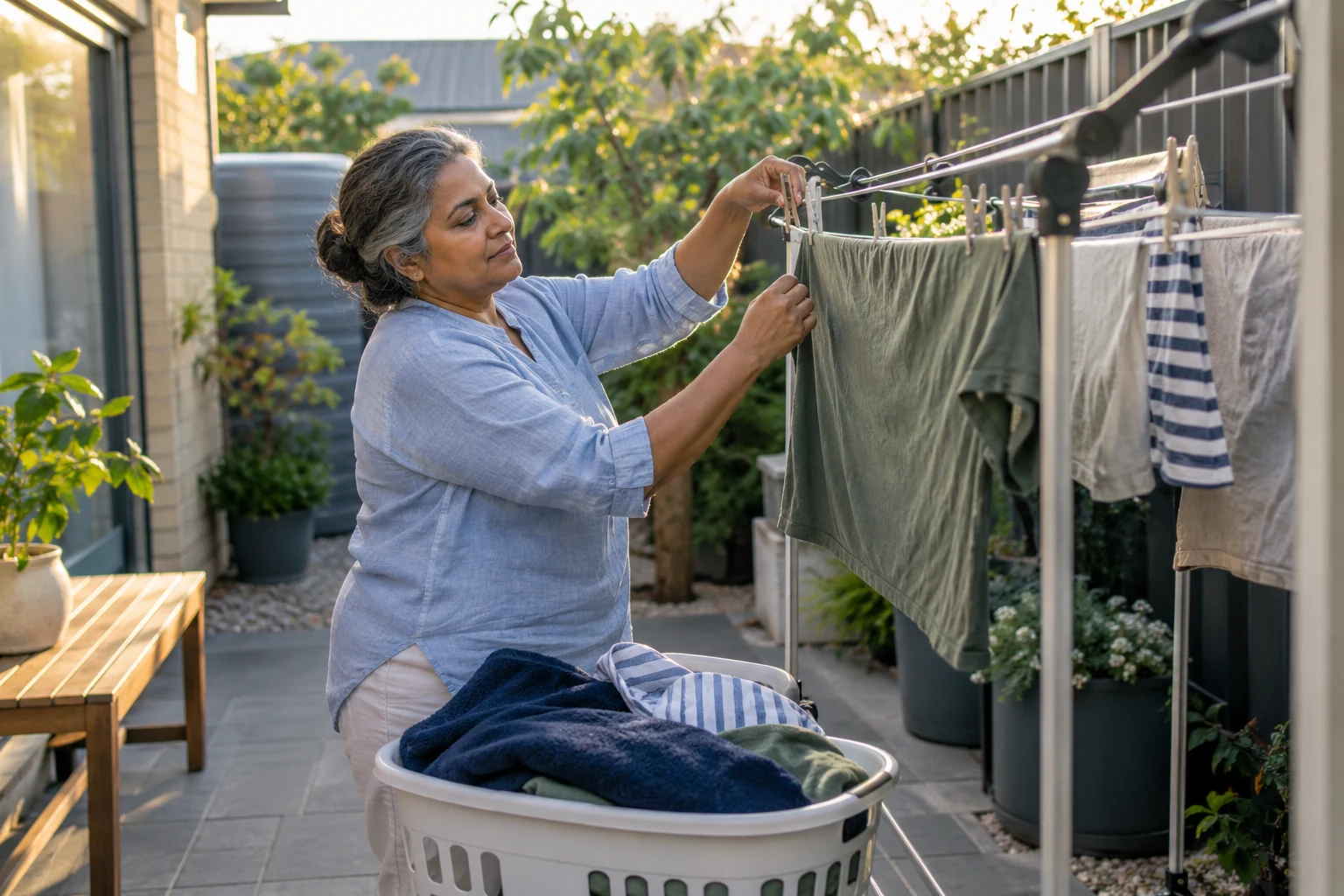
Laundry can involve lifting, bending, reaching and fine motor skills.

Assistive products may help participants with tasks such as:

  • Loading or unloading laundry
  • Carrying clothing
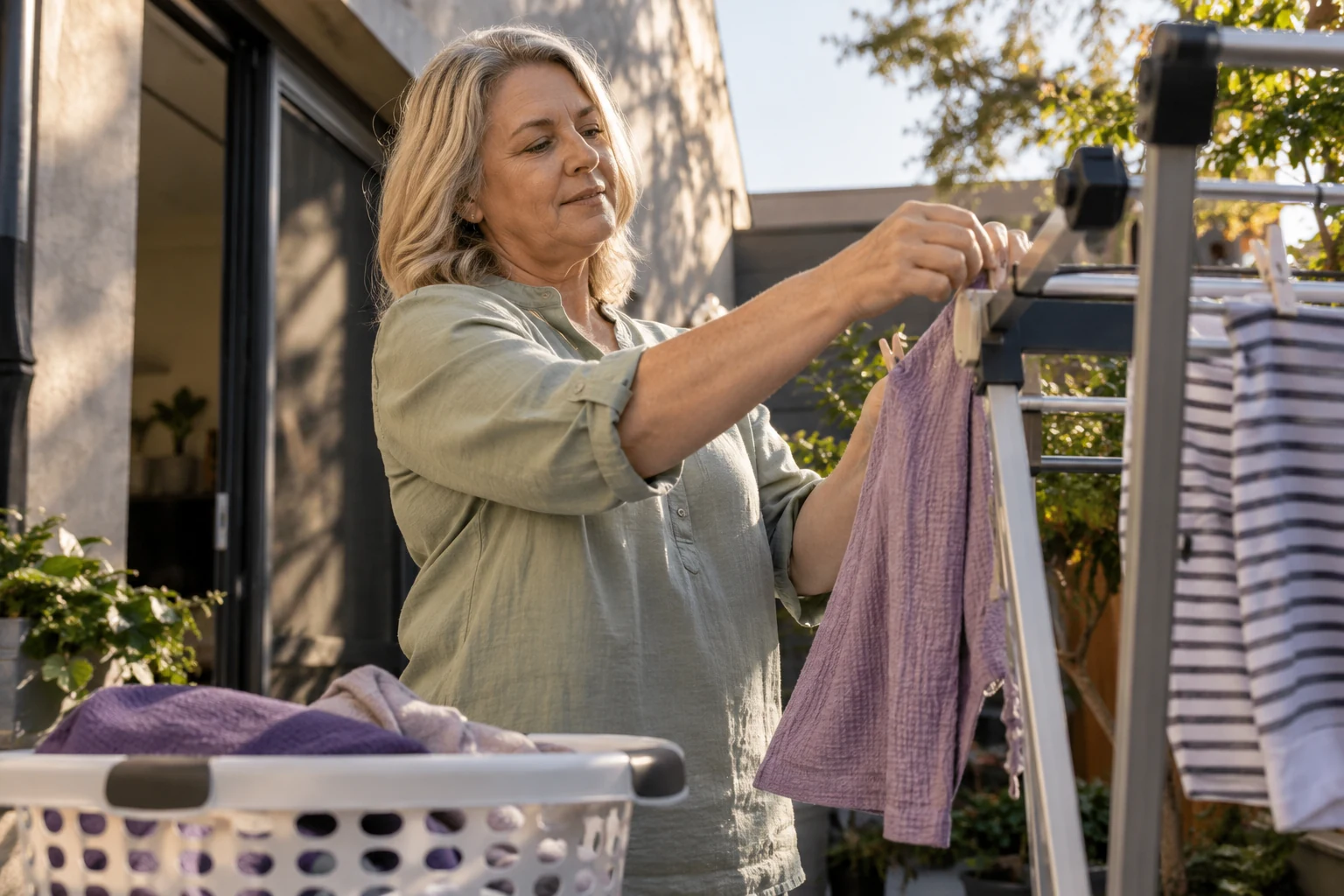
  • Hanging clothes
  • Reaching washing lines
  • Sorting laundry
  • Folding
  • Managing clothing
  • Handling household textiles

Depending on individual needs, equipment may include adapted or long-handled household tools designed to reduce barriers associated with dexterity, bending or reaching.

Adapted Tools for Activities Around the Home

Adapted Tools for Activities Around the Home

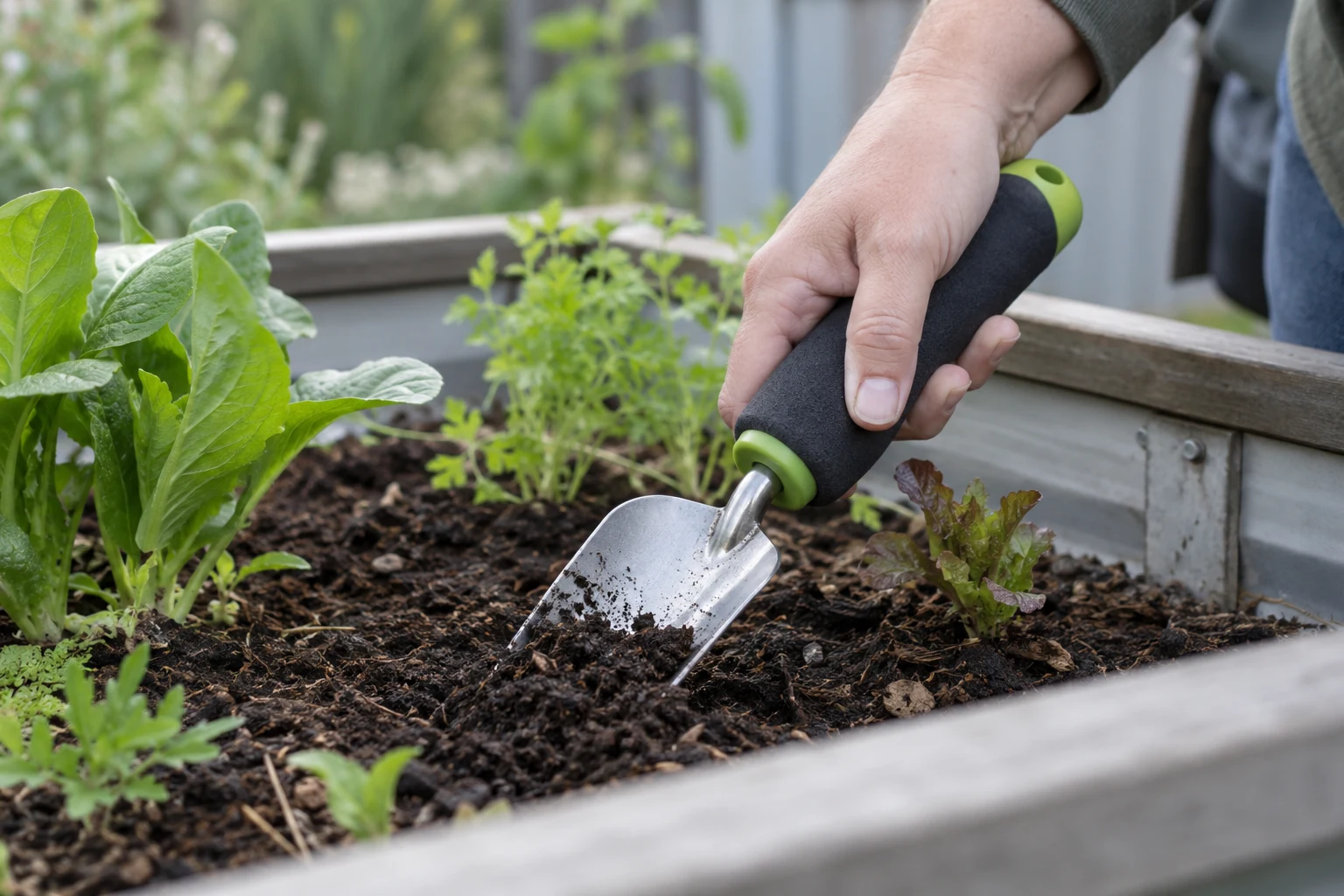
For participants who are able and want to take part in appropriate gardening or household outdoor activities, assistive products may help make these tasks more accessible.

This may include:

  • Lightweight gardening tools
  • Long-handled tools
  • Adaptive grips
  • Extended-reach equipment
  • Specialised equipment designed around disability-related needs

Any product should be appropriate to the participant's abilities and safe to use within their home environment.

Reduce the Need to Bend or Stretch

Reduce the Need to Bend or Stretch

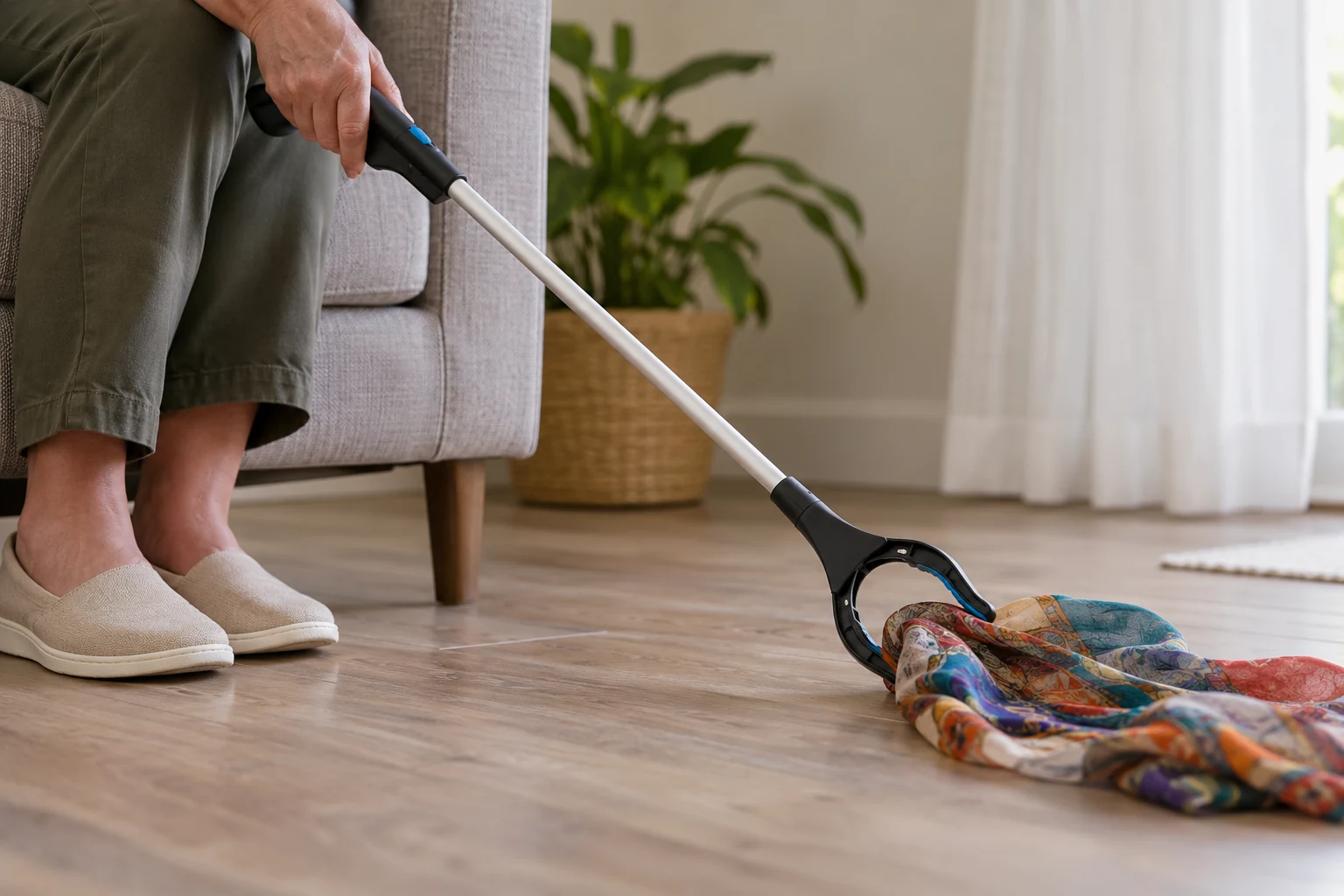
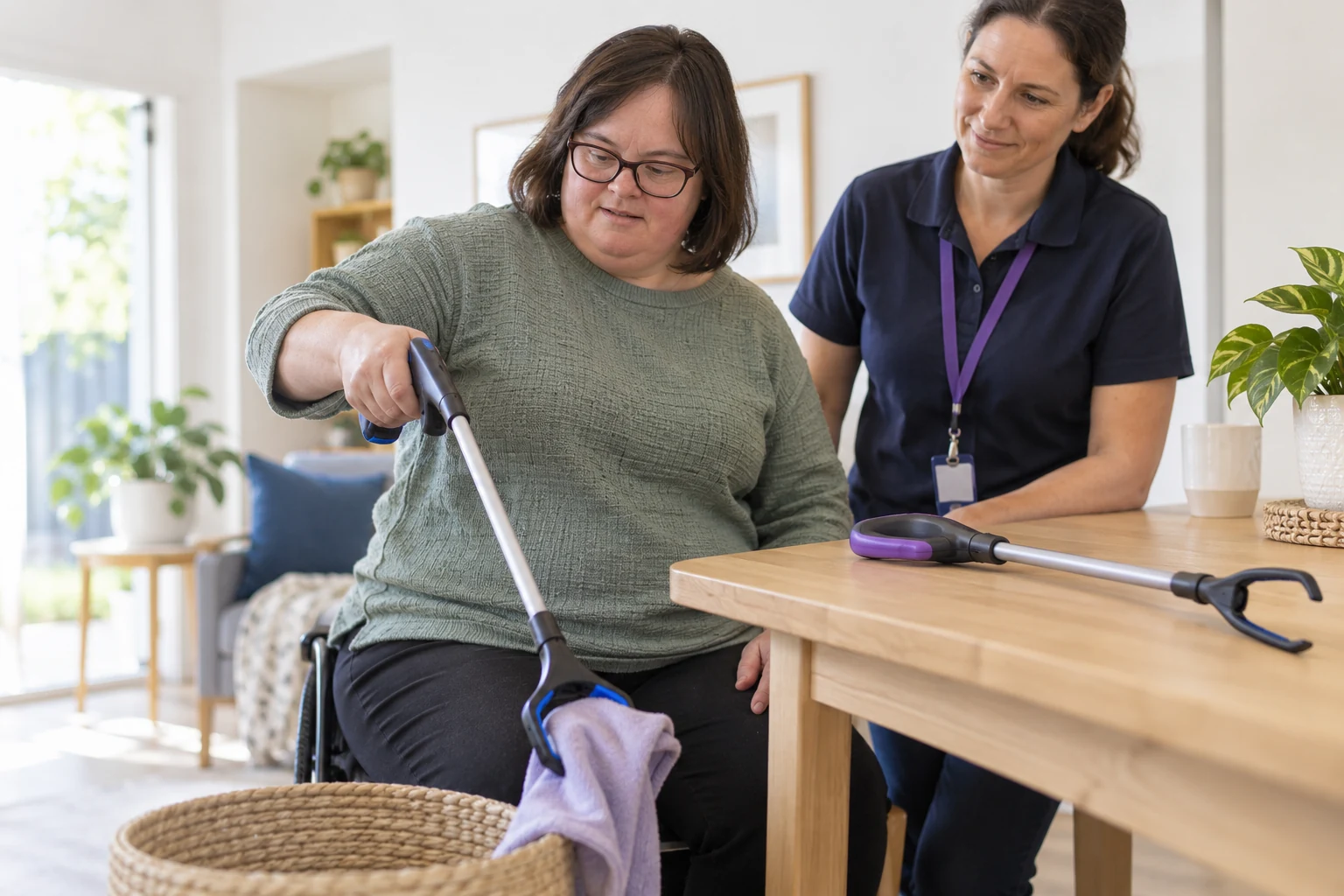
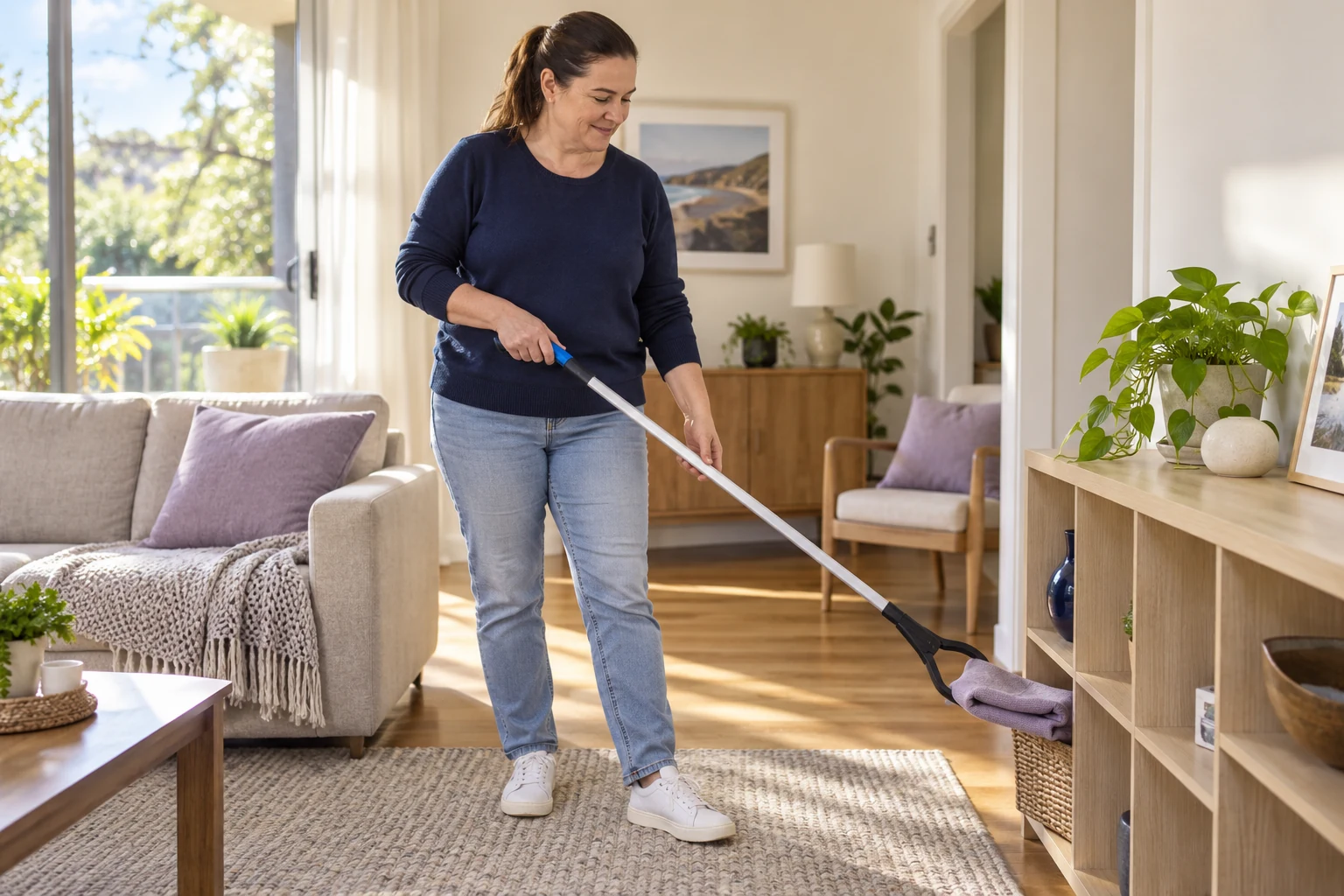
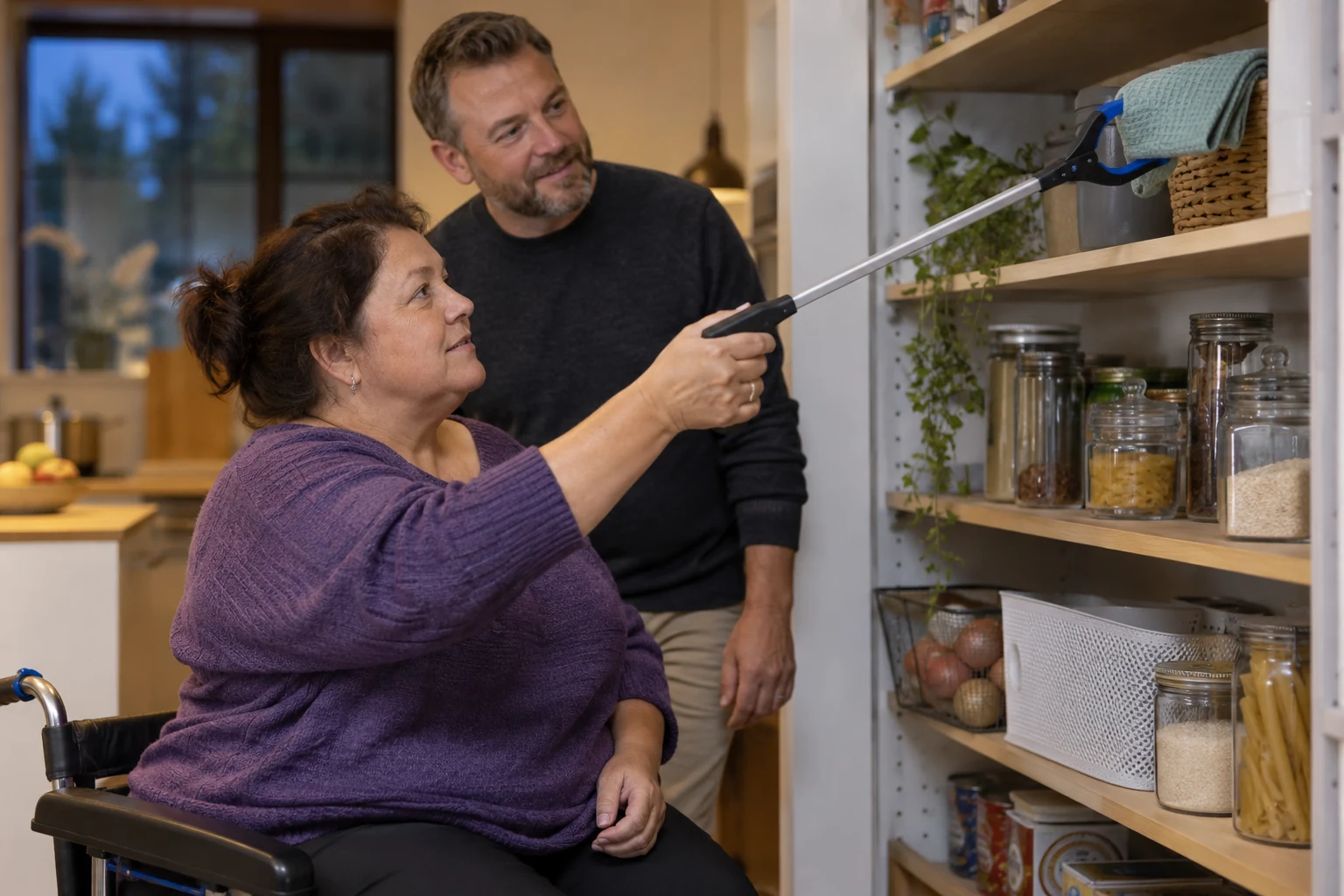
For some participants, reaching the floor, shelves or other household areas can be difficult.

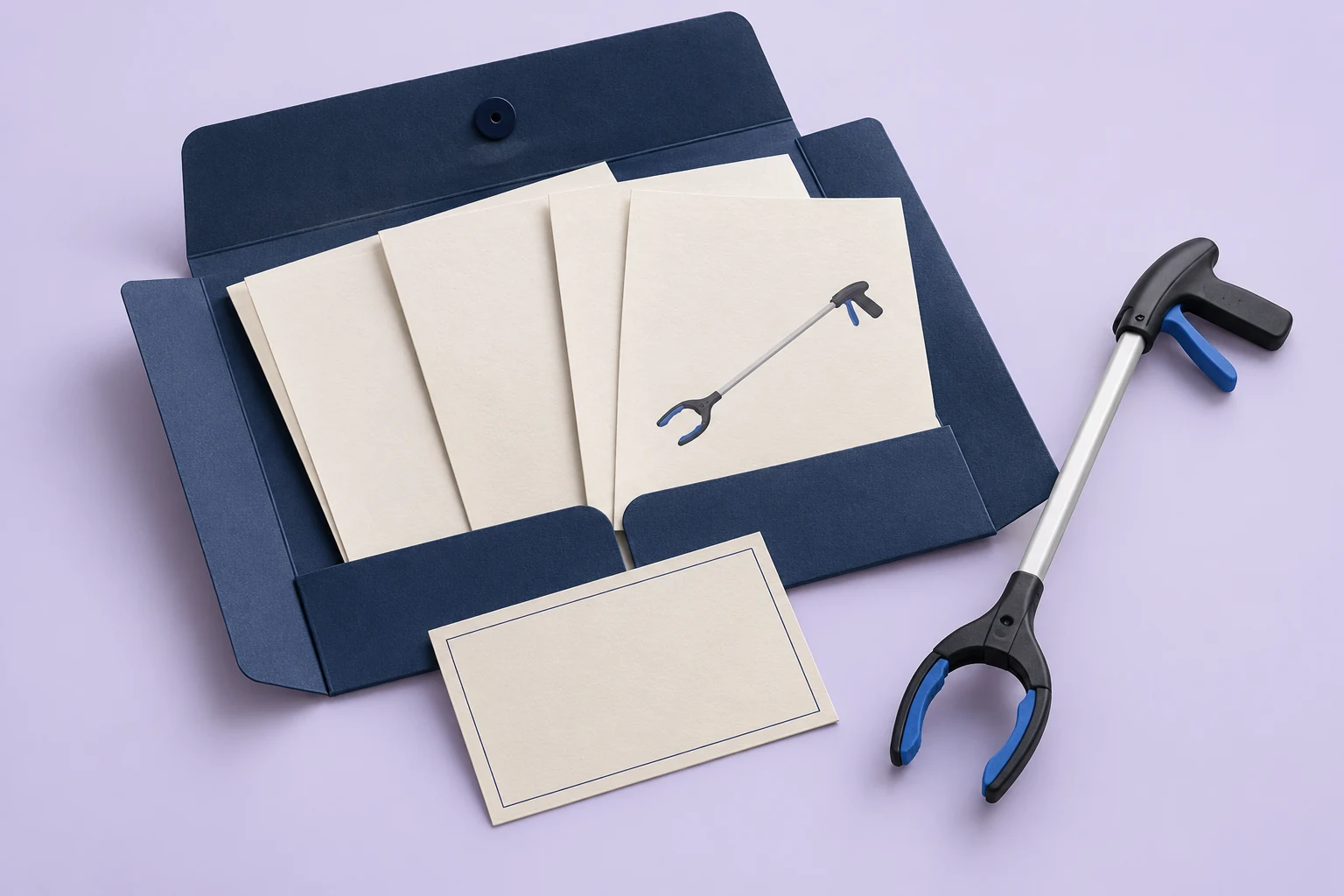
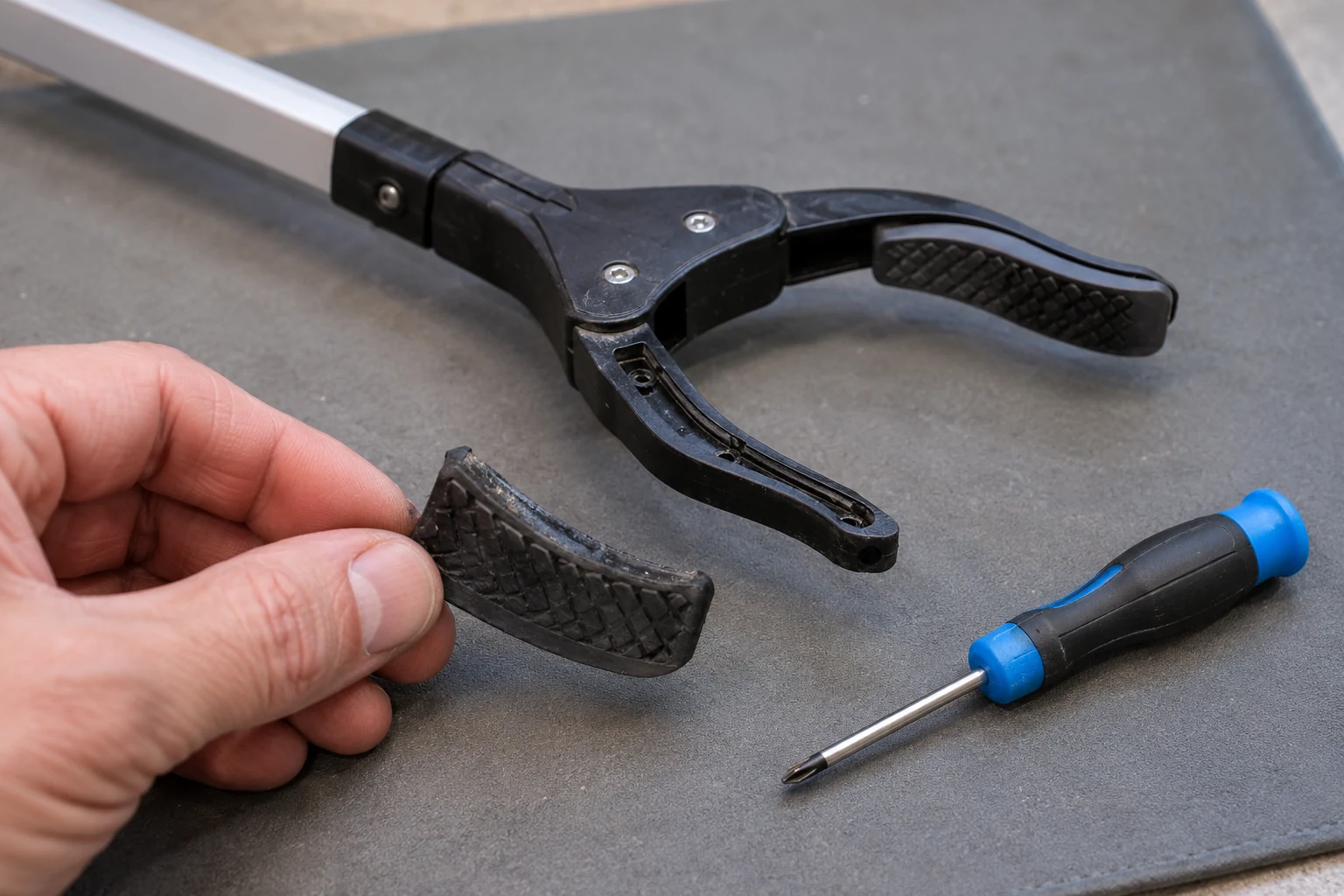
A reaching or pick-up aid may help with everyday activities such as:

  • Picking up dropped objects
  • Retrieving lightweight items
  • Reaching certain household areas
  • Managing clothing
  • Accessing everyday belongings

These products can sometimes reduce unnecessary bending or stretching and support greater independence.

Accessibility Features That Respond to Disability Needs

Accessibility Features That Respond to Disability Needs

In some circumstances, a standard household item may require an accessibility modification or upgrade to respond to a participant's disability-related needs.

NDIS-funded assistive products may include the additional cost of modifying or upgrading a standard household item to include required accessibility features.

This is different from simply purchasing an ordinary household appliance.

For example, the disability-related accessibility feature or modification may be the relevant support rather than the standard item itself.

Funding depends on the participant's individual circumstances and applicable NDIS rules.

Standard Household Items Are Different

Standard Household Items Are Different

The NDIS does not generally fund ordinary household items simply because they are useful or convenient.

Standard products that everyone would ordinarily need to purchase themselves may remain everyday living expenses.

Examples may include ordinary:

  • Kettles
  • Brooms
  • Vacuum cleaners
  • Washing machines
  • Dishwashers
  • Food processors
  • Standard kitchen appliances
  • Standard household furniture

There may be specific circumstances where different NDIS arrangements apply, including approved replacement supports.

However, participants should not assume an ordinary household product will automatically be funded.

Our team can help clarify what information may be required, but final funding decisions remain subject to NDIS rules and the participant's plan.

Different Products Require Different Levels of Advice

Different Products Require Different Levels of Advice

Assistive technology varies in complexity and risk.

Some products are relatively simple and low-risk.

Others may require advice, assessment, setup or training before they are suitable.

Factors may include:

  • The participant's disability
  • The type of equipment
  • Safety risks
  • Complexity
  • Cost
  • How the item will be used
  • Whether specialised setup is required
  • Whether incorrect use could cause harm

The level of assessment or evidence required depends on the individual product and current NDIS requirements.

Choosing Equipment That Actually Works for You

Choosing Equipment That Actually Works for You

Not every assistive product will suit every participant.

Where professional advice is required, this may involve an appropriate:

  • Occupational therapist
  • Physiotherapist
  • Allied health professional
  • Assistive technology advisor
  • Assistive technology assessor
  • Other suitably qualified practitioner

An advisor may consider:

  • Your functional abilities
  • Your disability
  • Your goals
  • Your home environment
  • Current support needs
  • Equipment already used
  • Safety
  • Ease of use
  • Whether another solution may work better

Choosing the right product can help reduce the risk of purchasing equipment that is unsuitable or unnecessary.

Some Products May Require Evidence

Some Products May Require Evidence

Depending on the type, cost and risk of assistive technology, the NDIS may require supporting information.

This may include:

  • Written professional advice
  • Functional information
  • Assistive technology assessment
  • Clinical recommendation
  • Information about participant goals
  • Information about how the product relates to disability
  • Pricing information
  • A quote
  • Details of a product trial
  • Information about alternative options

The evidence required varies depending on the proposed assistive technology.

Try Before Committing Where Appropriate

Try Before Committing Where Appropriate

For some products, a trial can help determine whether the equipment is suitable.

A trial may help answer questions such as:

  • Can the participant use the product safely?
  • Is it comfortable?
  • Does it actually make the task easier?
  • Is it suitable for the participant's home?
  • Does it improve independence?
  • Does it work with other supports?
  • Is it easy to understand and operate?
  • Is another option more suitable?

Where a trial is relevant and available, it may form part of selecting the most appropriate solution.

Getting the Product Is Only Part of the Process

Getting the Product Is Only Part of the Process

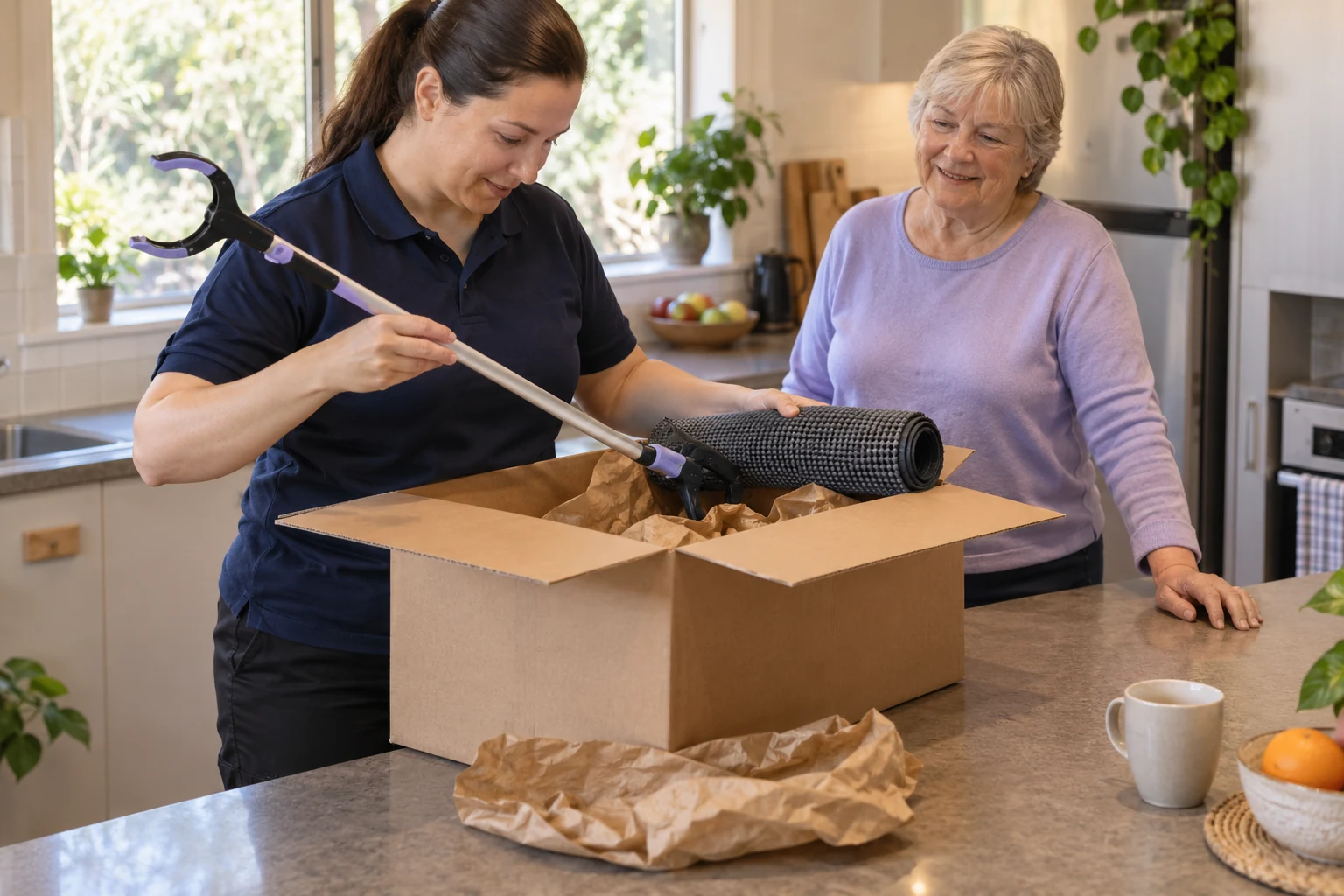
Some assistive products may require more than delivery.

Depending on the product, associated support may involve:

  • Delivery
  • Adjustment
  • Set-up
  • Installation where applicable
  • Demonstration
  • Training
  • Instructions for safe use
  • Participant education
  • Carer education
  • Support worker education

The exact service depends on the assistive product, participant needs and approved funding.

Safety Comes First

Safety Comes First

Assistive equipment should be used for its intended purpose.

Before use, participants and relevant support people may need to understand:

  • How the product works
  • How to use it safely
  • Weight or usage limits
  • Cleaning requirements
  • Maintenance requirements
  • When not to use it
  • What to do if it becomes damaged
  • Whether professional review is required
  • Whether participant needs have changed

Higher-risk products may require more formal assessment and professional advice.

Keeping Assistive Products Working Properly

Keeping Assistive Products Working Properly

Some assistive products may require ongoing:

  • Maintenance
  • Servicing
  • Replacement parts
  • Product-specific consumables
  • Adjustment
  • Repair

Where these costs relate specifically to an eligible assistive product, they may sometimes form part of the participant's NDIS support arrangements.

Availability and funding depend on the item, participant's plan and applicable NDIS rules.

Product warranty and supplier arrangements should also be considered.

What's the Difference?

What's the Difference?

These two services are related but serve different purposes.

Assistive Products for Household Tasks

This focuses on equipment that helps you complete household activities yourself or with less assistance.

For example: A participant may use an adapted chopping board and specialised kitchen equipment to prepare food more independently.

Household Tasks

This focuses on practical assistance from another person where disability prevents the participant from completing essential household activities.

For example: A support worker may complete essential cleaning that the participant cannot safely perform.

Some participants may benefit from both depending on their individual needs and NDIS plan.

Equipment Can Support Skill Development

Equipment Can Support Skill Development

Assistive technology may sometimes make it easier for participants to practise and develop everyday skills.

For example:

An adapted kitchen tool may help a participant practise preparing meals with greater independence.

A reaching aid may help the participant manage more household activities independently.

A specialised cleaning tool may reduce barriers when learning a household routine.

Where relevant, Assistive Products may work alongside our Development of Daily Living & Life Skills service.

The Product Should Work for You

The Product Should Work for You

Assistive technology should support your life rather than make everyday routines more complicated.

Where possible, you should be involved in decisions about:

  • What problem needs to be solved
  • What products are considered
  • How the product looks and feels
  • How easy it is to use
  • Where it will be used
  • Whether you want to trial it
  • How it fits into your routine
  • Whether it supports your goals
  • Who will help you use it

Your preferences matter.

Practical Solutions Built Around the Person

Practical Solutions Built Around the Person

Person-Centred

We begin with the participant's needs rather than a particular product.

Independence-Focused

Products should support the participant to do more where possible.

Practical

Equipment should address a real everyday barrier.

Safety-Focused

Risk and suitability must be considered.

Value-Focused

The solution should be appropriate and reasonable for the participant's needs.

Collaborative

Where required, we can work alongside relevant health professionals, Support Coordinators and other authorised people.

Clear

We explain what we can provide and what further assessment or information may be required.

Could Assistive Products Help You?

Could Assistive Products Help You?

This service may be relevant for eligible NDIS participants who:

  • Have difficulty preparing food because of disability
  • Have difficulty gripping household tools
  • Have difficulty reaching or bending
  • Experience reduced strength
  • Have reduced fine motor control
  • Need adapted kitchen equipment
  • Need specialised household cleaning equipment
  • Need support completing laundry tasks
  • Require disability-related household adaptations
  • Want to reduce reliance on support workers for particular household tasks
  • Want to become more independent at home
  • Have assistive technology funding relevant to their household support needs

The appropriate product depends on individual assessment, funding and participant circumstances.

Referring a Participant for Assistive Products?

Referring a Participant for Assistive Products?

We welcome enquiries from participants, Support Coordinators, allied health professionals, families, carers and other authorised members of the participant's support network.

Helpful information may include:

  • Participant details
  • Location
  • NDIS plan information
  • Disability-related functional needs
  • Household activities causing difficulty
  • Participant goals
  • Existing assistive technology
  • Current allied health involvement
  • Relevant assessments
  • Professional recommendations
  • Product specifications where known
  • Required accessibility features
  • Home environment information
  • Relevant risks
  • Approximate budget or approved funding where known

We can then discuss whether the requested support is within our service scope and what next steps may be required.

Finding the Right Household Assistive Product

Step 1 - Contact Us

Step 1 - Contact Us

Call 1800 896 599, email services@ndsprovider.com.au, or submit an online enquiry.

Step 2 - Tell Us About the Difficulty

Step 2 - Tell Us About the Difficulty

Explain which household activity is difficult and what you would like to be able to do more independently.

Step 3 - Review Your NDIS Funding

Step 3 - Review Your NDIS Funding

We discuss the relevant NDIS funding and any existing approvals or recommendations.

Step 4 - Identify Whether Advice Is Required

Step 4 - Identify Whether Advice Is Required

Depending on the product, you may require professional advice or an assistive technology assessment.

Step 5 - Explore Suitable Options

Step 5 - Explore Suitable Options

Appropriate products or solutions can be considered according to your needs.

Step 6 - Confirm Product & Funding Requirements

Step 6 - Confirm Product & Funding Requirements

Where required, supporting evidence, pricing or quotes are confirmed.

Step 7 - Supply & Set-Up

Step 7 - Supply & Set-Up

Where we are able to provide the product, arrangements are made for supply and any agreed associated services.

Step 8 - Review Use

Step 8 - Review Use

Where appropriate, the participant and relevant professionals can review whether the product is meeting the intended need.

Assistive Product Support Across Australia

National Disability Service Provider welcomes Assistive Products for Household Tasks enquiries Australia-wide.

We can consider enquiries from:

  • Victoria
  • New South Wales
  • Queensland
  • South Australia
  • Western Australia
  • Tasmania
  • Australian Capital Territory
  • Northern Territory

Actual product and service availability depends on:

  • Product required
  • Participant location
  • Supplier availability
  • NDIS funding
  • Assessment requirements
  • Delivery arrangements
  • Product complexity
  • Professional recommendations
  • Our ability to provide the requested support

Contact our team to discuss your specific requirements.

Assistive Products for Household Tasks FAQs

They are assistive technology products designed to help eligible NDIS participants carry out domestic and everyday activities within their home.

Depending on individual needs, products may support food preparation, cleaning, dishwashing, laundry, gardening, gripping, reaching and other household activities.

We can assess enquiries for eligible assistive household products, including specialised products that support food and drink preparation.

Yes. Products may include specialised cleaning equipment designed to reduce disability-related barriers such as difficulty bending, gripping or reaching.

Yes. Appropriate adapted equipment may help some participants complete aspects of laundry more independently.

Not usually. Standard household items are generally ordinary living expenses rather than disability supports. There may be limited circumstances involving approved replacement supports or disability-specific accessibility costs, so participants should confirm their individual funding arrangements.

Household Tasks generally involves assistance from a worker to complete eligible domestic activities. Assistive Products for Household Tasks involves equipment that may help the participant complete activities themselves or with less assistance.

Not every product requires the same level of professional advice. More complex or higher-risk assistive technology may require advice or assessment from an appropriate assistive technology professional.

This depends on the product, cost and current NDIS funding requirements. Some assistive technology requires supporting evidence or quotes before funding can be approved.

For some products, trials may be appropriate and available. This should be discussed with the supplier and relevant assistive technology professional.

Delivery arrangements depend on the individual product, supplier and participant location.

Maintenance, spare parts or specialised consumables associated with eligible assistive products may sometimes be included within relevant NDIS support arrangements.

We welcome Assistive Products for Household Tasks enquiries Australia-wide. Actual product supply and service arrangements depend on the participant's needs, location, supplier availability and NDIS funding.

Call 1800 896 599, email services@ndsprovider.com.au, or submit an online enquiry.

Our services are available Australia-wide, with physical offices currently located in Victoria and South Australia.

Service Addresses:

Victoria: 113/1510 Pascoe Vale, Coolaroo VIC 3048

South Australia: 97 Sir Donald Bradman Dr, Hilton SA 5033

Phone: 1800 896 599

Email: services@ndsprovider.com.au

Australia-Wide Enquiries

The Right Equipment Can Help You Do More for Yourself

Small changes can make a meaningful difference to everyday independence.

If disability makes household activities difficult, an appropriate assistive product may help make everyday tasks safer, easier and more manageable.

Talk to our team about Assistive Products for Household Tasks and the next steps for your individual needs.

We welcome participant and professional enquiries Australia-wide.

Email: services@ndsprovider.com.au